The world of cell growth has all the time been an interesting mix of innovation and challenges. On the coronary heart of this revolution, lies the cpp compiler for android, a robust instrument that enables us to harness the uncooked efficiency of C++ throughout the Android ecosystem. Think about a time when your favourite video games and apps had been solely doable with probably the most subtle coding languages.
Now, image your self, armed with the information of find out how to bridge the hole between high-performance C++ code and the huge Android panorama. That is the place our journey begins, an exhilarating exploration into the realm of native Android growth, the place we’ll unravel the intricacies of compilers, construct programs, and the magic that brings all of it collectively.
We’ll delve into the historic roots of C++, exploring its enduring relevance and superior efficiency capabilities. We’ll navigate the advanced Android terrain, understanding its {hardware} range and the assorted Android variations that exist. Moreover, we’ll study the advantages of using C++ in Android growth, from executing native code to accessing {hardware} assets instantly. Put together to dive deep, studying to pick the proper compiler in your challenge, configure your growth surroundings, and grasp the artwork of cross-compilation.
We’ll uncover the secrets and techniques of optimizing your code, integrating C++ with Java/Kotlin, and fixing frequent growth issues.
Introduction: The Want for a C++ Compiler on Android
Let’s rewind the clock a bit and take into account the grand tapestry of software program growth. C++, a language that has gracefully aged into its fourth decade, stays a titan within the trade. Its energy stems from its skill to supply unparalleled management over {hardware} assets, a key think about reaching optimum efficiency, which is usually a crucial requirement in fashionable purposes.
From the advanced programs that energy working programs to the cutting-edge graphics engines driving video video games, C++’s affect is simple.Android, however, presents a fascinatingly advanced problem. Its ecosystem is a vibrant mosaic of gadgets, every boasting a singular configuration of processors, reminiscence, and graphics capabilities. Coupled with this {hardware} range is the fragmentation of the Android working system itself, with quite a few variations and variations present concurrently.
This creates a difficult surroundings for builders, as they try to create purposes that operate seamlessly throughout this huge spectrum.
The Benefits of C++ in Android Growth
The wedding of C++ and Android unlocks a realm of advantages for builders. One of the crucial vital benefits is the power to execute native code instantly on the machine. This offers a direct path to the underlying {hardware}, permitting for optimization and enhanced efficiency.Here is how C++ shines within the Android panorama:
- Efficiency Increase: C++ code is compiled instantly into machine code, leading to quicker execution speeds in comparison with interpreted languages like Java (although Kotlin has turn into extra fashionable). That is notably advantageous for resource-intensive duties akin to sport growth, picture processing, and scientific simulations.
- {Hardware} Entry: C++ grants builders direct entry to {hardware} assets, together with the CPU, GPU, and reminiscence. This degree of management allows the creation of extremely optimized purposes that may leverage the complete potential of the machine. That is essential for purposes demanding real-time responsiveness or advanced computations.
- Code Reusability: C++ code might be reused throughout a number of platforms, together with Android, iOS, Home windows, and Linux. This reduces growth effort and time, as builders can write a single codebase that may be tailored for numerous platforms. This may be particularly helpful for cross-platform sport engines and libraries.
- Integration with Current Libraries: An enormous ecosystem of C++ libraries is obtainable, offering builders with pre-built options for a variety of duties. These libraries might be simply built-in into Android purposes, accelerating growth and offering entry to highly effective functionalities.
For example, take into account a high-performance 3D sport. By using C++ and the OpenGL ES graphics library, builders can create beautiful visuals and easy gameplay that pushes the boundaries of cell {hardware}. One other instance is a scientific utility that requires advanced mathematical calculations. C++ can be utilized to implement these calculations with optimum efficiency, permitting for real-time information processing and evaluation.
Moreover, C++ is crucial for constructing Android NDK (Native Growth Equipment) elements, facilitating the creation of performance-critical modules like customized UI parts, audio processing, and extra.
The facility of C++ lies in its skill to translate code into machine language instantly, bypassing the necessity for an middleman, thereby bettering execution velocity and decreasing latency.
Deciding on a Appropriate C++ Compiler for Android: Cpp Compiler For Android
Choosing the proper C++ compiler for Android growth is akin to choosing the proper brush for a painter. The instrument considerably impacts the ultimate product, affecting efficiency, compatibility, and the general growth expertise. The choices accessible, whereas various, provide distinct benefits and drawbacks. Understanding these nuances is essential to make sure your Android utility not solely capabilities accurately but additionally excels in its meant function.
Compiler Choices: clang, GCC, and Others
The panorama of C++ compilers for Android is primarily dominated by clang and, to a lesser extent, GCC. Nonetheless, different choices exist, every with its personal strengths and weaknesses. Deciding between them is dependent upon a challenge’s particular necessities.
- clang: This compiler is part of the LLVM challenge and is the really helpful and default compiler for Android growth. Google closely helps it. It’s identified for its glorious compatibility with the Android NDK (Native Growth Equipment), its quick compilation speeds, and its usually good efficiency. Clang’s diagnostic messages are sometimes extra user-friendly than these of GCC, making debugging simpler.
- GCC (GNU Compiler Assortment): GCC was a mainstay within the C++ world for a few years. Whereas it is nonetheless accessible for Android growth, its help and optimization for the platform should not as complete as clang’s. It could be chosen if there is a particular want for its options or if the challenge depends on legacy codebases which might be closely reliant on GCC-specific extensions.
- Different Compilers: Whereas much less frequent, different compilers like Intel’s C++ compiler (icpc) may be utilized in specialised conditions. These would possibly provide particular optimizations for Intel architectures, however their use on Android is restricted. The main target is often on clang or GCC.
Benefits and Disadvantages of Every Compiler
Every compiler carries its personal set of strengths and weaknesses, influencing a challenge’s growth lifecycle. Think about these features when making a range.
- clang:
- Benefits:
- Wonderful Android NDK compatibility: Ensures easy integration with the Android ecosystem.
- Quick compilation speeds: Reduces construct instances, resulting in quicker iterations.
- Consumer-friendly diagnostic messages: Simplifies debugging.
- Robust optimization for ARM architectures: Improves efficiency on Android gadgets.
- Disadvantages:
- Might not help all GCC-specific extensions: Requires code changes for initiatives relying closely on GCC options.
- Potential for barely totally different code era: Can typically reveal delicate bugs that had been masked by GCC’s habits.
- Benefits:
- GCC:
- Benefits:
- Mature and well-established: Offers a variety of options and in depth documentation.
- Help for a broader vary of architectures: Will be helpful in sure cross-platform situations.
- Might provide higher optimization for particular older codebases: Probably helpful for porting legacy initiatives.
- Disadvantages:
- Slower compilation speeds in comparison with clang: Will increase construct instances.
- Much less optimized for Android: Might lead to barely decrease efficiency on some gadgets.
- Compatibility points with the newest Android NDK options: Requires cautious configuration and will restrict entry to newer options.
- Benefits:
Selecting the Proper Compiler Based mostly on Mission Necessities and Goal {Hardware}
The best compiler selection is not a one-size-fits-all answer. It is a strategic resolution influenced by challenge specifics and the meant goal {hardware}.
- Mission Dimension and Complexity: For giant, advanced initiatives, the quicker compilation speeds and improved diagnostic messages of clang can considerably cut back growth effort and time.
- Codebase Compatibility: If a challenge closely depends on GCC-specific extensions, migrating to clang would possibly require vital code changes. In such circumstances, GCC might be the extra sensible selection initially, although a gradual migration to clang is usually really helpful.
- Efficiency Necessities: If optimum efficiency is paramount, clang’s robust optimization for ARM architectures is a major benefit. The efficiency distinction, whereas usually delicate, might be essential in resource-intensive purposes like video games or multimedia apps.
- Goal {Hardware}: Whereas most Android gadgets use ARM architectures, take into account potential compatibility if focusing on particular gadgets or emulators. Clang usually offers superior help for the usual Android {hardware} configurations.
- Group Help and Updates: Clang, being the default compiler and backed by Google, advantages from robust group help and frequent updates. This implies faster bug fixes and entry to the newest options.
The perfect compiler is the one which most accurately fits your challenge’s distinctive wants. There isn’t a universally “finest” compiler; it is all about making the precise selection for the duty at hand.
Establishing the Growth Surroundings
Embarking on the journey of C++ growth for Android necessitates a well-prepared growth surroundings. This important step isn’t just about putting in instruments; it is about crafting a digital workshop the place code might be sculpted, examined, and remodeled into purposes that may run on a wide range of Android gadgets. Consider it as making ready your artist’s studio earlier than the masterpiece might be painted – the precise instruments, accurately organized, are important for a easy and productive inventive course of.
Let’s get began.
Putting in the Android Native Growth Equipment (NDK)
The Android NDK is your gateway to writing native code for Android. It’s a set of instruments and libraries that lets you embed C and C++ code instantly into your Android purposes. The set up course of has turn into more and more streamlined, making it simpler than ever to get began.To put in the NDK, you may have a number of choices:
- Android Studio: Android Studio is the formally supported IDE for Android growth, and it simplifies the method considerably.
- Open Android Studio and navigate to “SDK Supervisor.”
- Within the “SDK Instruments” tab, test the field subsequent to “NDK (Aspect by aspect)” or an analogous possibility. The “Aspect by aspect” model lets you handle a number of NDK variations, which may be very useful.
- Click on “Apply” to obtain and set up the NDK. Android Studio will deal with the obtain and setup robotically.
- Command Line (for superior customers): In case you want a command-line method, you may obtain the NDK from the Android NDK archive on the Android developer web site. Extract the contents to a listing of your selection. This technique offers extra management over the set up location and model.
As soon as the NDK is put in, you must have a listing containing the NDK instruments, headers, and libraries. Observe the placement of this listing, as you will want it later when configuring your construct surroundings.
Configuring the Android Construct Surroundings
Configuring the construct surroundings entails establishing surroundings variables and construct instruments to allow your system to find and make the most of the NDK and different important elements for constructing your C++ purposes.Here is find out how to configure your construct surroundings:
- Setting Surroundings Variables: Surroundings variables present a manner in your working system to know the place to search out the instruments it wants. Two key variables to configure are:
- ANDROID_NDK_HOME: This variable ought to level to the foundation listing of your NDK set up. For instance, for those who put in the NDK in `~/Android/Sdk/ndk/25.2.9519653`, then `ANDROID_NDK_HOME` ought to be set to `~/Android/Sdk/ndk/25.2.9519653`.
- ANDROID_HOME: This variable factors to the foundation listing of your Android SDK set up. It is usually set robotically by Android Studio. In case you’re setting it manually, the trail sometimes appears to be like one thing like `~/Android/Sdk`.
- Establishing Construct Instruments: The Android construct system depends on numerous construct instruments, together with the Android SDK construct instruments, that are important for compiling, linking, and packaging your utility.
- Guarantee you may have the newest model of the Android SDK Construct Instruments put in. You possibly can handle these by way of the SDK Supervisor in Android Studio.
- Add the `platform-tools` listing inside your Android SDK set up to your `PATH` surroundings variable. This lets you use command-line instruments like `adb` (Android Debug Bridge) from any listing.
- Verification: After setting the surroundings variables, confirm that every little thing is configured accurately. Open a brand new terminal or command immediate and check out operating instructions like `ndk-build` (for those who’re utilizing the legacy construct system) or `cmake` (for those who’re utilizing CMake). If the instructions are discovered and run with out errors, your surroundings is probably going arrange accurately.
Essential: The precise steps for setting surroundings variables fluctuate relying in your working system (Home windows, macOS, or Linux). Seek the advice of your working system’s documentation for directions on setting surroundings variables.
Integrating the Compiler with the Android Construct System
The combination of the C++ compiler with the Android construct system lets you compile your C++ code and hyperlink it together with your Java/Kotlin code, creating an entire Android utility. The 2 hottest construct programs for Android C++ growth are CMake and the legacy `ndk-build` system.
- CMake: CMake is the really helpful construct system for contemporary Android growth. It is a cross-platform construct system generator that simplifies the method of constructing native code.
- Making a `CMakeLists.txt` file: This file describes your challenge’s construction and construct directions. You will specify the supply information, embrace directories, and libraries wanted in your challenge.
- Configuring CMake: In your Android Studio challenge, you will configure CMake by specifying the trail to your `CMakeLists.txt` file and some other essential construct configurations.
- Constructing with CMake: Android Studio will robotically invoke CMake to construct your native code everytime you construct your Android utility.
- Instance `CMakeLists.txt` (simplified):
cmake_minimum_required(VERSION 3.4.1) add_library( native-lib SHARED src/principal/cpp/native-lib.cpp) find_library( log-lib log) target_link_libraries( native-lib $log-lib) - ndk-build (Legacy): The `ndk-build` system is the older construct system and continues to be supported. It depends on a `Android.mk` file to explain your challenge.
- Creating an `Android.mk` file: This file accommodates the construct directions in your native code.
- Constructing with `ndk-build`: You sometimes run `ndk-build` from the command line inside your challenge’s listing to construct your native code.
- Integration with Gradle: You might want to configure your `construct.gradle` file to inform Gradle to make use of `ndk-build`.
- Instance `Android.mk` (simplified):
LOCAL_PATH := $(name my-dir) embrace $(CLEAR_VARS) LOCAL_MODULE := native-lib LOCAL_SRC_FILES := native-lib.c embrace $(BUILD_SHARED_LIBRARY) - Different Construct Programs: Different construct programs like Bazel may also be used, however they’re much less frequent for Android C++ growth.
Compiling C++ Code for Android

Embarking on the journey of compiling C++ code for Android is akin to making ready a scrumptious, advanced dish: you want the precise components, the right instruments, and a touch of endurance. The method, whereas probably daunting at first look, is finally rewarding, permitting you to harness the facility and efficiency of C++ throughout the Android ecosystem. It opens up a world of prospects, from high-performance video games and computationally intensive purposes to integrating present C++ libraries into your Android initiatives.
Understanding find out how to compile C++ code for Android is essential for anybody trying to develop native Android purposes. It bridges the hole between the acquainted C++ surroundings and the distinctive calls for of cell growth, offering builders with the instruments to create strong and environment friendly purposes. This entails navigating the intricacies of cross-compilation, understanding totally different architectures, and mastering the construct course of.
Writing and Compiling C++ Code for Android
The creation and compilation of C++ code for Android is a multi-step course of. It begins with writing the C++ supply code and concludes with producing an Android utility bundle (APK) prepared for deployment. The core of this course of lies in utilizing the Android NDK (Native Growth Equipment), which offers the required instruments and libraries to construct native code for Android.
Right here’s a breakdown of the everyday steps:
- Write the C++ Code: Create your C++ supply information (.cpp or .cxx) containing your utility’s logic. This code will work together with the Android system, probably utilizing the Android Native API (NDK).
- Create a Construct Script (Android.mk and Software.mk): These information are important for telling the NDK find out how to construct your code. They specify the supply information, embrace paths, libraries to hyperlink, and goal structure. The
Android.mkfile describes the modules to construct, whereas theSoftware.mkfile configures the construct surroundings, such because the goal architectures and the minimal Android API degree. - Use the NDK Toolchain: The NDK features a toolchain (compiler, linker, and many others.) particularly designed for cross-compilation. This toolchain will translate your C++ code into machine code for the goal Android structure.
- Construct the Native Library: The NDK’s construct system (often utilizing `ndk-build` or CMake) compiles your C++ code right into a shared library (.so file). This library accommodates the native code that can run on the Android machine.
- Combine into the Android Mission: The .so file must be positioned within the right location inside your Android challenge (sometimes underneath `jniLibs/` listing for older initiatives or utilizing CMake within the `src/principal/cpp/` listing for newer initiatives).
- Name Native Code from Java/Kotlin: In your Java or Kotlin code, you’ll use the Java Native Interface (JNI) to name capabilities outlined in your C++ library. You will must declare native strategies and cargo the native library.
- Construct the APK: Lastly, the Android construct system combines the Java/Kotlin code, the native library, and different assets to create the APK, which might then be put in on an Android machine.
This course of entails a number of steps, however it permits builders to make the most of the efficiency and adaptability of C++ inside their Android purposes. For example, take into account a state of affairs the place a developer desires to port a computationally intensive picture processing library written in C++ to an Android app. By following these steps, the developer can combine the library into the app, considerably bettering efficiency in comparison with utilizing a pure Java implementation.
Cross-Compilation Methods for Focusing on Completely different Android Architectures
Android gadgets are available a wide range of architectures, together with ARM (armeabi-v7a, arm64-v8a), x86, and x86_64. Cross-compilation is the method that lets you construct your C++ code to run on these totally different architectures from a single growth surroundings. That is achieved utilizing the NDK, which offers toolchains for every supported structure.
Right here’s how cross-compilation works:
- Goal Structure Specification: Within the `Software.mk` file, you specify the architectures you wish to help utilizing the `APP_ABI` variable. For instance:
APP_ABI := armeabi-v7a arm64-v8a x86 x86_64This tells the NDK to generate native libraries for the required architectures.
- Toolchain Choice: The NDK makes use of totally different toolchains for every structure. The toolchain contains the compiler, linker, and different instruments essential to translate your C++ code into machine code for the goal structure.
- Construct Course of: If you construct your challenge, the NDK construct system runs the compilation course of for every structure laid out in `APP_ABI`. This ends in a number of .so information, one for every structure.
- Packaging for the APK: Through the APK creation, the construct system packages the suitable .so information for the goal architectures. The APK will include the native libraries for the architectures it helps. When the appliance runs on a tool, the system will choose the right .so file for the machine’s structure.
This method ensures that your utility can run on a variety of Android gadgets. For instance, a sport developer would possibly goal each ARM and x86 architectures to maximise the attain of their sport. By cross-compiling, they’ll present a model of their sport that runs natively on numerous gadgets, main to raised efficiency and person expertise. Failing to help a number of architectures may end up in the app not operating on some gadgets or operating with poor efficiency as a result of system having to emulate the native code.
Making a Easy “Hiya, World!” Software in C++ for Android
Let’s craft a basic “Hiya, World!” utility in C++ for Android. This straightforward instance will illustrate the core ideas of compiling and operating C++ code on an Android machine.
Here is a step-by-step information:
- Arrange the Growth Surroundings: Guarantee you may have the Android SDK, NDK, and an acceptable IDE (like Android Studio) put in and configured as described beforehand.
- Create a New Android Mission: Create a brand new Android challenge in Android Studio (or your most well-liked IDE) utilizing Kotlin or Java.
- Create the C++ Supply File (hey.cpp): Create a brand new C++ supply file, for instance, `hey.cpp`, in your challenge (e.g., in `app/src/principal/cpp/`). Add the next code:
#embrace <jni.h>
#embrace <string>
#embrace <android/log.h>#outline LOG_TAG "HelloJni"
#outline LOGI(...) __android_log_print(ANDROID_LOG_INFO,LOG_TAG,__VA_ARGS__)extern "C" JNIEXPORT jstring JNICALL
Java_com_example_hellojni_MainActivity_stringFromJNI(JNIEnv
-env, jobject /* this
-/)std::string hey = "Hiya from C++!";
LOGI("Returning %s", hey.c_str());
return env->NewStringUTF(hey.c_str());
This code defines a JNI operate `stringFromJNI` that returns the “Hiya from C++!” string. The code additionally contains logging performance utilizing `android/log.h`.
- Create the `CMakeLists.txt` File: In case you’re utilizing CMake (really helpful), create a `CMakeLists.txt` file in the identical listing as `hey.cpp`. This file specifies find out how to construct your native library.
cmake_minimum_required(VERSION 3.4.1)add_library(
hello-jni
SHARED
hey.cpp)find_library(
log-lib
log)target_link_libraries(
hello-jni
$log-lib)This CMake script defines a shared library named `hello-jni` that features `hey.cpp` and hyperlinks it with the `log` library.
- Configure the Construct: In your Android challenge’s `construct.gradle` file (module:app), configure the `externalNativeBuild` part to make use of CMake:
android

              ...

              externalNativeBuild

                      cmake

                              path file('src/principal/cpp/CMakeLists.txt')

                              model '3.18.1' // Or your CMake model


              ...
- Create the JNI Interface in Java/Kotlin: In your Java/Kotlin `MainActivity`, declare a local technique and cargo the native library:
// In Java:

  public class MainActivity extends AppCompatActivity

          static

                  System.loadLibrary("hello-jni"); // Load the native library
public native String stringFromJNI(); // Declare the native technique
@Override
protected void onCreate(Bundle savedInstanceState)
tremendous.onCreate(savedInstanceState);
setContentView(R.format.activity_main);
TextView television = (TextView) findViewById(R.id.sample_text);
television.setText(stringFromJNI()); // Name the native technique and show the end result
// In Kotlin:
class MainActivity : AppCompatActivity()
companion object
init
System.loadLibrary("hello-jni")
exterior enjoyable stringFromJNI(): String
override enjoyable onCreate(savedInstanceState: Bundle?)
tremendous.onCreate(savedInstanceState)
setContentView(R.format.activity_main)
val television: TextView = findViewById(R.id.sample_text)
television.textual content = stringFromJNI()
This code declares a local technique `stringFromJNI()` that returns a string. It additionally masses the `hello-jni` library. The `stringFromJNI()` technique is then referred to as to retrieve the “Hiya from C++!” string, which is then displayed in a `TextView`.
- Construct and Run: Construct your Android challenge. The construct course of will compile the C++ code, generate the native library (.so file), and combine it into your APK. Run the appliance on an Android machine or emulator. The “Hiya from C++!” string ought to be displayed on the display.
This “Hiya, World!” instance offers a stable basis for understanding the core mechanics of integrating C++ code into your Android purposes. By beginning with this easy program, you may steadily broaden your information and create extra advanced purposes that leverage the facility of C++. For example, this similar method can be utilized to combine a sport engine, picture processing library, or some other C++ code into an Android app, demonstrating the flexibility of this method.
Constructing and Operating Android Purposes with C++
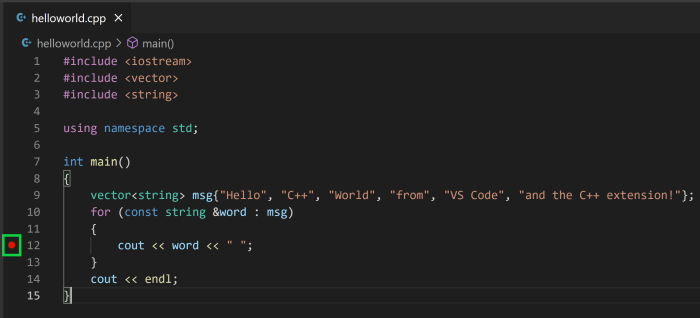
Now that you’ve your C++ compiler buzzing in your Android growth machine, it is time to convey your code to life on an precise machine or emulator. This entails a number of key steps: constructing the appliance, integrating your C++ code, after which deploying and operating it. Let’s dive in!
Constructing an Android Software with C++ Code
The method of developing an Android utility that harnesses the facility of C++ entails a harmonious mix of Java (or Kotlin), the Android construct system (Gradle), and the native code you’ve got written. The Android Native Growth Equipment (NDK) performs an important function in bridging the hole between the Java/Kotlin world and your C++ code. The construct course of, in essence, is a fastidiously orchestrated dance of compilation and linking, bringing collectively all the required elements right into a single, runnable bundle.
To construct an Android utility with C++ code, you will want to carry out the next:
- Mission Setup: Start by creating a brand new Android challenge in Android Studio. Select both Java or Kotlin as your main language, because the core Android UI and utility logic might be written in one among these.
- NDK Configuration: Configure the NDK inside your challenge’s `construct.gradle` file (often the app-level `construct.gradle`). This entails specifying the `ndkVersion` and configuring the `externalNativeBuild` part. This tells Gradle the place to search out and find out how to construct your native code.
- Native Supply Listing: Create a listing, usually named `cpp`, inside your `app/src/principal/` listing. That is the place your C++ supply information (`.cpp` or `.c`) and header information (`.h`) will reside.
- CMakeLists.txt or Android.mk: Determine in your construct system. CMake is mostly really helpful for contemporary initiatives. In case you select CMake, create a `CMakeLists.txt` file in your `cpp` listing. In case you want `Android.mk`, create it in the identical listing. This file instructs the construct system on find out how to compile and hyperlink your C++ code.
- Write C++ Code: Write your C++ code, together with the capabilities you plan to name out of your Java/Kotlin code. Be conscious of the Android NDK’s necessities and the accessible APIs.
- JNI Interface: Create a Java Native Interface (JNI) interface. This entails creating Java/Kotlin strategies that can name your C++ capabilities. Use the `extern “C”` linkage specification in your C++ code to make sure correct identify mangling.
- Construct the Software: Construct your Android utility. Android Studio, by way of Gradle, will invoke the NDK and your chosen construct system (CMake or `ndk-build`) to compile the C++ code right into a native library (often a `.so` file). This library might be packaged together with your Android utility.
- Load the Native Library: Load the native library in your Java/Kotlin code utilizing `System.loadLibrary()`. That is sometimes achieved within the `onCreate()` technique of your Exercise or the initialization part of your utility.
- Name C++ Capabilities: Name the JNI-defined strategies in your Java/Kotlin code, which can in flip name your C++ capabilities.
Integrating C++ Libraries into an Android Mission
The true energy of C++ lies in its in depth ecosystem of libraries. Integrating these libraries into your Android challenge opens up a world of prospects, from advanced algorithms to classy graphics rendering. The method, whereas just like constructing with your individual code, entails a number of further steps to make sure the library’s compatibility and proper linking.
Here is find out how to combine C++ libraries into an Android challenge:
- Select a Library: Choose the C++ library you wish to use. Ensure it is suitable with the Android platform (i.e., it does not depend on Home windows-specific options or different platform-specific dependencies).
- Receive the Library Information: Receive the library’s supply code, pre-built binaries, or each. When you have the supply code, you will must compile it for the Android platform. Pre-built binaries are sometimes offered within the type of `.so` information (shared object libraries) for various architectures (e.g., `armeabi-v7a`, `arm64-v8a`, `x86`, `x86_64`).
- CMake or Android.mk Configuration: In case you’re utilizing CMake, add the library’s embrace directories and hyperlink the library to your challenge in your `CMakeLists.txt` file. For instance:
    include_directories(/path/to/library/embrace)

    add_library(mylibrary SHARED IMPORTED)

    set_target_properties(mylibrary PROPERTIES IMPORTED_LOCATION /path/to/library/libmylibrary.so)

    target_link_libraries(my-native-lib mylibrary)
In case you’re utilizing `Android.mk`, specify the library’s embrace directories and the library information in your `Android.mk` file.
- Copy Library Information (if essential): When you have pre-built `.so` information, you will want to put them within the right listing construction inside your challenge. That is often `app/src/principal/jniLibs/` adopted by architecture-specific folders (e.g., `armeabi-v7a`, `arm64-v8a`). Observe that with CMake, the construct system can usually deal with this robotically.
- Construct and Hyperlink: Construct your Android utility. The construct system will hyperlink the library to your native code.
- Use the Library: Embrace the required header information from the library in your C++ code and use the library’s capabilities.
Deploying and Operating the Compiled Software
As soon as you’ve got efficiently constructed your utility, it is time to see it in motion on an Android machine or emulator. This entails deploying the appliance bundle (APK) and operating it. The method is simple, however it requires a number of configurations to make sure a easy expertise.
Here is the method of deploying and operating the compiled utility:
- Join a Machine or Launch an Emulator: Join your Android machine to your laptop through USB, or launch an Android emulator inside Android Studio. Be certain that USB debugging is enabled in your machine (within the developer choices).
- Choose a Goal Machine: In Android Studio, choose your linked machine or emulator from the machine choice menu.
- Construct and Set up: Construct your utility in Android Studio. This can create an APK file and set up it on the chosen machine or emulator.
- Run the Software: Click on the “Run” button in Android Studio, or choose “Run” from the “Run” menu. This can launch your utility on the machine or emulator.
- Take a look at and Debug: Take a look at your utility to make sure that the C++ code is functioning accurately. Use Android Studio’s debugging instruments (breakpoints, logcat) to debug any points.
- Structure Concerns: Concentrate on the totally different CPU architectures supported by Android gadgets. Be certain that your native libraries are constructed for the suitable architectures (e.g., `armeabi-v7a`, `arm64-v8a`, `x86`, `x86_64`). In case you do not present a library for a selected structure, your app might crash on gadgets with that structure. Android Studio’s construct course of often handles this robotically for those who’ve configured your `CMakeLists.txt` or `Android.mk` accurately.
Debugging C++ Code on Android
Let’s face it, even probably the most seasoned programmers encounter bugs. They’re like mischievous gremlins, all the time discovering their manner into our code, wreaking havoc and inflicting sudden habits. Fortunately, debugging is the artwork of searching down these gremlins and banishing them out of your Android C++ purposes. This part delves into the strategies and instruments that can equip you to turn into a debugging superhero, able to squashing bugs with finesse and precision.
Strategies for Debugging C++ Code on Android
Debugging Android C++ code requires a multifaceted method. You will must make use of a wide range of strategies to successfully monitor down and get rid of these pesky errors.
- Utilizing Log Statements: The time-honored custom of inserting print statements (utilizing `std::cout` or the Android logging system, `LOG`) into your code stays a robust debugging instrument. Strategically positioned log statements can reveal the state of variables, the movement of execution, and pinpoint the precise location the place issues go awry. Bear in mind to make use of totally different log ranges (e.g., `LOGD` for debug, `LOGE` for error) to categorize your messages.
- Attaching a Debugger: That is the place the true magic occurs. By attaching a debugger like GDB or LLDB to your operating Android utility, you achieve unprecedented management over the execution of your C++ code. You possibly can set breakpoints, step by way of the code line by line, examine variable values, and study the decision stack. This degree of granular management is invaluable for understanding advanced points.
- Utilizing Debugging Libraries: Think about incorporating specialised debugging libraries like `assert.h`. Assertions are like early warning programs; they mean you can test for situations that
-must* be true at particular factors in your code. If an assertion fails, this system will halt, and you will instantly know one thing is incorrect. - Reminiscence Evaluation: Reminiscence leaks and corruption are frequent culprits in C++ purposes. Instruments like Valgrind (although indirectly usable on Android with out vital effort) and Android Studio’s reminiscence profiler might help you establish and repair memory-related issues.
- Distant Debugging: For extra advanced debugging situations, particularly when coping with {hardware} interactions or community communications, take into account distant debugging. This entails establishing a debugging server in your Android machine and connecting to it out of your growth machine. This lets you examine the appliance’s state even when it is operating on a distant machine.
Use of Debugging Instruments: GDB or LLDB
GDB (GNU Debugger) and LLDB (Low Stage Debugger) are the workhorses of C++ debugging. They supply a command-line interface and a wealthy set of options that allow you to dissect your code and uncover the foundation causes of bugs.
- GDB (GNU Debugger): GDB is a venerable and broadly used debugger. It’s a highly effective instrument for inspecting operating packages.
- Set up and Setup: GDB is often accessible on most Linux distributions. For Android growth, you will want a cross-compiler and the Android NDK (Native Growth Equipment). You will sometimes invoke GDB through a distant debugging setup, the place GDB runs in your growth machine and connects to a GDB server on the Android machine.
- Primary Instructions:
- `break ` or `break `: Units a breakpoint.
- `run`: Begins this system.
- `proceed`: Resumes execution after a breakpoint.
- `subsequent`: Executes the subsequent line of code (stepping over operate calls).
- `step`: Steps right into a operate name.
- `print `: Shows the worth of a variable.
- `backtrace`: Exhibits the decision stack.
- Instance: Think about you may have a crash in a operate referred to as `processData`. You’d set a breakpoint originally of `processData` with `break processData`, run your app, and when it hits the breakpoint, use `print` to examine variables and `backtrace` to see how the operate was referred to as.
- LLDB (Low Stage Debugger): LLDB is a contemporary debugger that’s gaining recognition, notably on macOS and within the Android NDK.
- Set up and Setup: LLDB is usually the default debugger on macOS. For Android, it is included within the NDK. The setup is just like GDB, utilizing a distant debugging method.
- Primary Instructions (just like GDB, however with some variations in syntax):
- `breakpoint set -n ` or `breakpoint set -l `: Units a breakpoint.
- `course of launch`: Begins this system.
- `proceed`: Resumes execution after a breakpoint.
- `subsequent`: Executes the subsequent line of code (stepping over operate calls).
- `step`: Steps right into a operate name.
- `body variable `: Shows the worth of a variable.
- `thread backtrace`: Exhibits the decision stack.
- Instance: For instance you wish to debug a operate named `calculateResult`. You’d set a breakpoint with `breakpoint set -n calculateResult`, run your app, and when the breakpoint is hit, use `body variable` to look at the values of variables inside `calculateResult`.
- Selecting Between GDB and LLDB: LLDB is usually most well-liked as a result of its efficiency, fashionable options, and integration with the Clang compiler (which is frequent in Android growth). Nonetheless, GDB is a mature and broadly supported debugger, and chances are you’ll discover it simpler to make use of in case you are already aware of it.
Methods for Troubleshooting Widespread Points
Debugging isn’t just about utilizing instruments; it is about using efficient methods to slim down the supply of issues. Here is a breakdown of frequent points and find out how to deal with them.
- Crashes and Segmentation Faults:
- Stack Overflow: A stack overflow occurs when a operate calls itself too many instances (recursion and not using a base case), or when native variables devour an excessive amount of stack house. Test the decision stack (utilizing `backtrace` or `thread backtrace`) to see if there may be extreme recursion. Study the scale of your native variables.
- Null Pointer Dereference: Accessing a member of a null pointer is a basic supply of crashes. Use `if (ptr != nullptr)` checks earlier than dereferencing pointers.
- Reminiscence Corruption: Reminiscence corruption can manifest in some ways, resulting in crashes or sudden habits. Use reminiscence debugging instruments like Valgrind or the Android Studio reminiscence profiler to establish reminiscence leaks, buffer overflows, and different memory-related errors.
- Logic Errors: These are bugs the place your code does not do what you meant it to do.
- Incorrect Calculations: Use log statements to show the values of variables at totally different factors in your calculations. Rigorously evaluation your formulation and algorithms.
- Incorrect Conditional Logic: Ensure your `if`, `else if`, and `else` statements are behaving as anticipated. Use log statements to trace the movement of execution.
- Off-by-One Errors: These are frequent in loops and array indexing. Double-check your loop situations and array indices to make sure they’re right.
- Efficiency Points:
- Inefficient Algorithms: Profile your code to establish efficiency bottlenecks. Use a profiler to find out which capabilities are taking probably the most time. Think about using extra environment friendly algorithms or information buildings.
- Reminiscence Allocation/Deallocation: Frequent reminiscence allocations and deallocations can decelerate your utility. Think about using reminiscence swimming pools or different strategies to optimize reminiscence administration.
- Android-Particular Points:
- JNI Errors: When working with JNI (Java Native Interface), guarantee your Java and C++ code are accurately synchronized. Double-check the signatures of your JNI capabilities.
- Permissions Points: In case your utility will not be working as anticipated, test the Android permissions. Guarantee you may have requested and been granted the required permissions in your `AndroidManifest.xml` file.
- Useful resource Administration: Android has its personal useful resource administration system. Be sure to are accurately releasing assets, akin to file handles and community connections, when you find yourself completed with them.
Optimization Methods for Android C++ Growth
Optimizing C++ code for Android is akin to fine-tuning a high-performance engine; it is about squeezing each ounce of energy whereas making certain a easy, environment friendly experience. This part delves into the essential methods for reaching peak efficiency, decreasing code bloat, and maximizing useful resource utilization on Android gadgets. It’s a journey that blends artwork and science, demanding a eager eye for element and a willingness to experiment.
Let’s get began on the trail to a lean, imply, Android C++ machine!
Decreasing Code Dimension and Reminiscence Utilization
Code dimension and reminiscence utilization instantly influence utility responsiveness and battery life. Smaller code interprets to quicker loading instances, lowered reminiscence footprint, and improved total efficiency. Optimizing these features is paramount for a constructive person expertise.
Here is find out how to obtain these targets:
- Code Stripping: Use the Android NDK’s `strip` instrument to take away debugging symbols and pointless code out of your compiled binaries. This considerably reduces the ultimate APK dimension. For instance, after constructing your challenge, run `arm-linux-androideabi-strip libmygame.so` to strip the shared library.
- Template Instantiation: Be conscious of template instantiation. Overuse can result in code bloat. Explicitly instantiate templates just for the categories you truly use. This avoids producing code for unused template specializations.
- Information Construction Optimization: Select information buildings which might be memory-efficient in your particular wants. For instance, if you understand the utmost dimension of a set beforehand, utilizing a fixed-size array may be extra memory-efficient than a dynamically resizing vector.
- Code Reuse: Determine and reuse code the place doable. Keep away from duplicating performance. Create capabilities and lessons that may be utilized throughout totally different elements of your utility. This not solely reduces code dimension but additionally improves maintainability.
- Inline Capabilities Judiciously: Whereas inlining can enhance efficiency by avoiding operate name overhead, overusing it may possibly improve code dimension. Inline solely small, often referred to as capabilities. The compiler usually handles inlining robotically, so manually inlining ought to be achieved with care.
- String Optimization: Strings can devour a major quantity of reminiscence. Think about using string interning, the place equivalent strings share the identical reminiscence location. Additionally, select applicable string lessons and keep away from pointless string copies.
- Useful resource Administration: Correctly handle assets like textures, audio information, and different belongings. Load assets solely when wanted and launch them when they’re not required. Use strategies like useful resource compression (e.g., utilizing `pngcrush` for photos) to cut back the scale of belongings.
Figuring out Efficiency Bottlenecks with Profiling Instruments
Profiling instruments are invaluable for pinpointing efficiency bottlenecks in your Android C++ code. They supply detailed insights into the place your utility spends its time, permitting you to focus your optimization efforts successfully.
Listed below are a number of instruments and strategies to contemplate:
- Android Studio Profiler: The built-in Android Studio Profiler provides a complete view of your utility’s efficiency, together with CPU utilization, reminiscence allocation, and community exercise. It is a terrific place to begin for figuring out common efficiency points. It offers graphs and timelines exhibiting CPU utilization over time, permitting you to simply spot spikes and dips in efficiency.
- Perfetto: Perfetto is a robust, system-wide tracing instrument for Android. It captures a variety of system occasions, together with CPU exercise, reminiscence allocations, and I/O operations. It lets you analyze efficiency points at a really granular degree.
- Google’s CPU Profiler (a part of Android Studio): This profiler lets you analyze CPU utilization intimately. You possibly can document CPU traces and study operate name stacks, establish hotspots, and perceive the place your code is spending probably the most time. It usually visualizes operate name durations in a flame graph, making it straightforward to identify efficiency bottlenecks.
- NDK Profiler (Simpleperf): Simpleperf is a command-line profiling instrument included with the Android NDK. It samples CPU exercise and offers details about operate name counts and execution instances. This instrument is very helpful for analyzing native code efficiency.
- Reminiscence Profiling Instruments: Use instruments just like the Android Studio Reminiscence Profiler or `heaptrack` (accessible on some Linux programs and might be tailored for Android) to observe reminiscence allocation and deallocation. This helps establish reminiscence leaks and inefficient reminiscence utilization patterns.
- Instrumentation: Manually instrument your code by including timing code (e.g., utilizing `std::chrono`) to measure the execution time of particular capabilities or code blocks. This offers exact efficiency information for crucial sections of your code.
Deciphering Profiling Information
As soon as you’ve got collected profiling information, you’ll want to interpret it successfully. Search for the next:
- Hotspots: Determine capabilities or code blocks that devour a disproportionate quantity of CPU time. These are the areas that require probably the most consideration.
- Reminiscence Leaks: Detect reminiscence that’s allotted however by no means launched. This could result in utility crashes and poor efficiency over time.
- Inefficient Algorithms: Determine algorithms which have a excessive time or house complexity. Think about using extra environment friendly alternate options. For instance, in case you are looking out a big dataset, utilizing a binary search as a substitute of a linear search can dramatically enhance efficiency.
- Pointless Allocations: Discover areas the place reminiscence is being allotted often. Optimize these areas to cut back reminiscence overhead.
By leveraging these optimization strategies and profiling instruments, you may considerably improve the efficiency and effectivity of your Android C++ purposes, resulting in a smoother and extra fulfilling person expertise. The journey of optimization is ongoing, requiring steady evaluation, experimentation, and refinement to attain the perfect outcomes. The secret is to be proactive, methodical, and all the time try for enchancment.
Integrating C++ with Java/Kotlin in Android
Android app growth often advantages from leveraging the efficiency of C++ for computationally intensive duties whereas using the pliability and user-friendly options of Java or Kotlin for the person interface and total utility logic. This integration is achieved primarily by way of the Java Native Interface (JNI), a bridge that enables Java/Kotlin code to work together with native code (C++ on this context).
The method entails making a shared library containing the C++ code after which calling capabilities inside that library from the Java/Kotlin aspect. This hybrid method allows builders to create highly effective and environment friendly Android purposes.
Understanding the Java Native Interface (JNI)
The Java Native Interface (JNI) is the cornerstone for integrating C++ with Java/Kotlin in Android growth. It is a framework that enables Java/Kotlin code to name capabilities written in native languages like C and C++. The JNI offers a set of APIs that allow communication between the Java Digital Machine (JVM) and native code. It is a two-way road; Java/Kotlin can name C++ capabilities, and C++ can name Java/Kotlin strategies.
The core precept entails a ‘bridge’ – a set of capabilities that translate between Java/Kotlin’s information sorts and C++’s, and deal with the intricacies of reminiscence administration and context switching.
Calling C++ Capabilities from Java/Kotlin Code
The method of calling C++ capabilities from Java/Kotlin code entails a number of key steps, beginning with defining native strategies in your Java/Kotlin class after which implementing the corresponding C++ capabilities in a shared library.
- Outline Native Strategies in Java/Kotlin: In your Java/Kotlin class, declare strategies utilizing the `native` . These strategies act as placeholders for the C++ capabilities.
- Create a Header File: After compiling your Java/Kotlin code, use the `javah` instrument (or an analogous instrument in Kotlin) to generate a header file. This header file accommodates operate prototypes that the C++ compiler must implement the native strategies.
- Implement C++ Capabilities: Create a C++ supply file and implement the capabilities outlined within the header file. The operate names should adhere to a selected naming conference that the JNI makes use of to map Java/Kotlin strategies to their C++ implementations.
- Construct a Shared Library: Compile your C++ code right into a shared library (often with a `.so` extension) utilizing the Android NDK.
- Load the Library in Java/Kotlin: In your Java/Kotlin code, load the shared library utilizing `System.loadLibrary(“your_library_name”)`. This makes the C++ capabilities accessible.
- Name the C++ Capabilities: Name the native strategies out of your Java/Kotlin code. The JNI will deal with the interpretation and execution.
For example, take into account a easy state of affairs the place you wish to name a C++ operate to calculate the sum of two integers.
Java (Instance):“`javapublic class MyClass static System.loadLibrary(“my_library”); // Load the shared library public native int add(int a, int b); // Declare the native technique“`
C++ (Instance):“`cpp#embrace extern “C” JNIEXPORT jint JNICALLJava_com_example_myproject_MyClass_add(JNIEnv
env, jobject thiz, jint a, jint b)
return a + b;“`
On this case, `Java_com_example_myproject_MyClass_add` is the identify of the C++ operate, following the JNI naming conference: `Java_` + absolutely certified class identify + `_` + technique identify. The `JNIEnv` pointer offers entry to JNI capabilities, `jobject` is a reference to the Java object, and `jint` is the JNI’s illustration of an integer.
Calling Java/Kotlin Strategies from C++ Code
The JNI facilitates the reverse course of as nicely, permitting C++ code to name Java/Kotlin strategies. This may be helpful for duties like updating the UI from a background thread or accessing Java/Kotlin-specific APIs.
- Get the Java Class and Technique IDs: In your C++ code, you will must receive the category ID and technique ID of the Java/Kotlin technique you wish to name.
- Create an Occasion of the Java Class (if essential): If the tactic is an occasion technique, you will want an occasion of the Java class.
- Name the Java Technique: Use the `JNIEnv` interface to name the Java technique, passing the required arguments.
Think about an instance the place a C++ operate must replace a TextView within the Android UI.
Java (Instance):“`javapublic class MyActivity extends Exercise non-public TextView myTextView; @Override protected void onCreate(Bundle savedInstanceState) tremendous.onCreate(savedInstanceState); setContentView(R.format.activity_main); myTextView = findViewById(R.id.myTextView); System.loadLibrary(“my_library”); updateTextViewFromCpp(); // Name a C++ operate public void setTextViewText(String textual content) myTextView.setText(textual content); public native void updateTextViewFromCpp(); // Native technique“`
C++ (Instance):“`cpp#embrace #embrace extern “C” JNIEXPORT void JNICALLJava_com_example_myproject_MyActivity_updateTextViewFromCpp(JNIEnv
env, jobject thiz)
jclass activityClass = env->GetObjectClass(thiz); jmethodID setTextViewTextMethodId = env->GetMethodID(activityClass, “setTextViewText”, “(Ljava/lang/String;)V”); if (setTextViewTextMethodId != nullptr) jstring textual content = env->NewStringUTF(“Hiya from C++!”); env->CallVoidMethod(thiz, setTextViewTextMethodId, textual content); env->DeleteLocalRef(textual content); // Essential: Launch native references “`
This C++ code obtains the category and technique IDs of `setTextViewText`, creates a Java string, and calls the tactic to replace the `TextView`.
Bear in mind to deal with potential errors and launch native references to keep away from reminiscence leaks.
Greatest Practices for Information Switch Between C++ and Java/Kotlin
Environment friendly and protected information switch between C++ and Java/Kotlin is essential for the efficiency and stability of your Android utility. The JNI offers mechanisms for transferring information, however it additionally introduces complexities associated to reminiscence administration and information sort conversions.
- Information Kind Mapping: Perceive the mapping between Java/Kotlin and C++ information sorts. For instance, `jint` in C++ corresponds to `int` in Java/Kotlin, `jstring` to `String`, and so forth.
- Reminiscence Administration: Pay shut consideration to reminiscence administration, particularly when working with objects and strings. Use `NewStringUTF` to create Java strings from C++ strings and `DeleteLocalRef` to launch native references. For extra advanced information buildings, think about using world references (`NewGlobalRef` and `DeleteGlobalRef`) however be cautious about their lifetime.
- String Dealing with: When passing strings between Java/Kotlin and C++, be conscious of character encoding (UTF-8 is usually used). Convert between Java/Kotlin strings and C++ strings utilizing JNI capabilities like `GetStringUTFChars` and `NewStringUTF`. Bear in mind to launch the character array after use.
- Object Dealing with: When passing objects, concentrate on object lifecycles and reference counts. Use native and world references appropriately to stop untimely rubbish assortment.
- Error Dealing with: Implement strong error dealing with in each C++ and Java/Kotlin code. Test for null pointers, exceptions, and different potential points. JNI offers capabilities to test for errors and throw exceptions.
- Efficiency Concerns: Reduce information switch between Java/Kotlin and C++ to cut back overhead. Think about passing information in bulk (e.g., utilizing arrays or customized information buildings) quite than particular person parts. Profile your code to establish efficiency bottlenecks.
- Use of Information Buildings: Think about using information buildings like `std::vector` or customized C++ lessons to handle information throughout the C++ layer, after which map these to Java/Kotlin equivalents when transferring information. This might help enhance efficiency and code group.
For example, take into account a scenario the place you’ll want to move an array of integers from Java/Kotlin to C++. You’d sometimes use a `jintArray` in C++ and iterate by way of it, accessing every factor. Equally, when returning an array, you’ll create a brand new `jintArray` and populate it with the outcomes.
Java (Instance):“`javapublic native int[] processIntArray(int[] enter);“`
C++ (Instance):“`cpp#embrace extern “C” JNIEXPORT jintArray JNICALLJava_com_example_myproject_MyClass_processIntArray(JNIEnv
env, jobject thiz, jintArray enter)
jint
arr = env->GetIntArrayElements(enter, nullptr);
jsize len = env->GetArrayLength(enter); jintArray end result = env->NewIntArray(len); jint
resultArr = new jint[len];
for (int i = 0; i SetIntArrayRegion(end result, 0, len, resultArr); env->ReleaseIntArrayElements(enter, arr, 0); // Launch enter array delete[] resultArr; return end result;“`
This instance exhibits find out how to entry the weather of a Java int array in C++, carry out some operations, and return a brand new int array. Bear in mind to launch the array parts after you are completed utilizing them to stop reminiscence leaks.
The `0` in `ReleaseIntArrayElements` means the Java array might be up to date with any modifications made to the C++ array. Utilizing `JNI_ABORT` would launch the array with out updating the Java array, and `JNI_COMMIT` would launch and commit modifications.
Widespread Points and Options in Android C++ Growth
Creating with C++ on Android, whereas providing efficiency advantages, is not all the time a stroll within the park. You would possibly encounter some roadblocks alongside the best way. Happily, most of those challenges have well-defined options, and understanding them will considerably enhance your growth expertise and utility high quality. Let’s delve into a few of the most typical points and find out how to deal with them.
Reminiscence Administration Challenges
Reminiscence administration is a perennial concern in C++, and it is amplified on resource-constrained gadgets like Android telephones. Mishandling reminiscence can result in crashes, efficiency degradation, and even safety vulnerabilities.
Here is a breakdown of reminiscence administration points and options:
- Reminiscence Leaks: These happen when dynamically allotted reminiscence is not accessible however is not deallocated, steadily consuming accessible assets.
- Resolution: Implement good pointers (e.g., `std::unique_ptr`, `std::shared_ptr`) to robotically handle object lifetimes. Use instruments like Valgrind (through the Android NDK) or ASan (AddressSanitizer) to detect leaks. Think about using RAII (Useful resource Acquisition Is Initialization) to make sure assets are launched when objects exit of scope.
- Dangling Pointers: These come up when a pointer references reminiscence that has already been deallocated, resulting in undefined habits, crashes, or information corruption.
- Resolution: Keep away from handbook reminiscence deallocation until completely essential. In case you should use uncooked pointers, make sure the reminiscence they level to stays legitimate for the pointer’s lifetime. All the time set tips to `nullptr` after `delete`ing the reminiscence they pointed to.
Use static evaluation instruments to establish potential dangling pointer points.
- Resolution: Keep away from handbook reminiscence deallocation until completely essential. In case you should use uncooked pointers, make sure the reminiscence they level to stays legitimate for the pointer’s lifetime. All the time set tips to `nullptr` after `delete`ing the reminiscence they pointed to.
- Buffer Overflows/Underflows: Happen when writing information past the allotted reminiscence boundaries of a buffer, probably overwriting adjoining information and even crashing the appliance.
- Resolution: Use bounds checking when accessing arrays and buffers. Make use of protected string manipulation capabilities (e.g., these within the `std::string` class). Make the most of instruments like ASan to detect buffer overflows at runtime.
- Fragmentation: Can result in efficiency points as reminiscence turns into fragmented, making it tough to allocate giant contiguous blocks.
- Resolution: Use reminiscence swimming pools to allocate and deallocate objects of the identical dimension. Think about using customized allocators which might be optimized in your particular use case. Be conscious of the frequency and dimension of reminiscence allocations and deallocations.
Threading and Synchronization Points
Android purposes usually must carry out duties concurrently to keep up responsiveness. Nonetheless, improper dealing with of threads can result in race situations, deadlocks, and different synchronization issues.
Understanding and mitigating these threading points is essential:
- Race Situations: Happen when a number of threads entry and modify shared information concurrently, resulting in unpredictable outcomes.
- Resolution: Use mutexes (e.g., `std::mutex`) to guard shared assets. Make use of atomic operations (e.g., `std::atomic`) for easy operations that require thread security. Rigorously take into account the order wherein locks are acquired to keep away from deadlocks.
- Deadlocks: Occur when two or extra threads are blocked indefinitely, ready for one another to launch assets.
- Resolution: Design your code to keep away from round dependencies in useful resource acquisition. Use a constant locking order throughout all threads. Implement timeout mechanisms to detect and break deadlocks. Use instruments like impasse detectors (e.g., these accessible in some debuggers) to establish potential deadlocks.
- Hunger: Happens when a thread is repeatedly denied entry to a useful resource, although it is accessible.
- Resolution: Guarantee equity in useful resource allocation, for instance, utilizing a queue or precedence mechanism. Rigorously handle thread priorities to stop high-priority threads from monopolizing assets.
- Thread Security of Libraries: Not all C++ libraries are inherently thread-safe. Utilizing a non-thread-safe library in a multithreaded surroundings can result in sudden habits.
- Resolution: Assessment the documentation of the libraries you employ to find out their thread security traits. If a library is not thread-safe, think about using a single occasion of it from a single thread or offering exterior synchronization.
Platform-Particular Variations
Creating for Android introduces platform-specific variations that may complicate C++ growth. These variations stem from the Android working system, the underlying {hardware}, and the interplay with Java/Kotlin code.
Here is find out how to deal with platform-specific challenges:
- Android NDK and Toolchain: The Android NDK (Native Growth Equipment) offers the instruments and libraries essential for C++ growth on Android. Understanding the NDK and its toolchain is crucial.
- Resolution: Familiarize your self with the NDK’s construct system (CMake or ndk-build), the accessible libraries (e.g., `android_native_app_glue`), and the platform-specific APIs. Repeatedly replace the NDK to profit from bug fixes, efficiency enhancements, and help for brand new Android options.
- ABI (Software Binary Interface) Compatibility: Android helps a number of ABIs (e.g., `armeabi-v7a`, `arm64-v8a`, `x86`, `x86_64`). You might want to guarantee your C++ code is compiled for the goal ABIs.
- Resolution: Configure your construct system to focus on the specified ABIs. Take a look at your utility on gadgets with totally different ABIs to make sure compatibility. Think about using the `construct.gradle` file in your Android challenge to specify the ABIs you wish to help.
- Interplay with Java/Kotlin: Interacting with Java/Kotlin code is a core facet of Android growth.
- Resolution: Use JNI (Java Native Interface) to name C++ code from Java/Kotlin and vice versa. Rigorously handle information sorts and reminiscence between the 2 languages. Think about using libraries just like the Android NDK’s `android_native_app_glue` to simplify the mixing.
- Useful resource Administration: Android manages assets otherwise than conventional desktop environments.
- Resolution: Concentrate on Android’s useful resource lifecycle and the way it impacts your C++ code. Use Android’s useful resource administration mechanisms (e.g., `AssetManager`) to entry belongings. Think about using the `android_native_app_glue` library, which might simplify the dealing with of Android’s lifecycle occasions.
Troubleshooting Widespread Errors
Encountering errors is inevitable in software program growth. Having a scientific method to troubleshooting can considerably velocity up the debugging course of.
Here is a troubleshooting information for frequent errors:
- Construct Errors: These happen in the course of the compilation and linking levels.
- Causes: Incorrect construct configuration, lacking dependencies, syntax errors, or compiler errors.
- Options: Rigorously evaluation the error messages. Test your construct scripts (e.g., `CMakeLists.txt`, `Android.mk`). Guarantee all dependencies are accurately specified.
Confirm the syntax of your C++ code. Seek the advice of the compiler documentation for particular error codes.
- Runtime Crashes: These occur in the course of the execution of your utility.
- Causes: Reminiscence corruption, null pointer dereferences, accessing invalid reminiscence addresses, or unhandled exceptions.
- Options: Use a debugger (e.g., GDB) to examine this system state on the time of the crash. Analyze the crash logs (e.g., from `adb logcat`) to establish the supply of the error. Use reminiscence checking instruments (e.g., Valgrind, ASan) to detect memory-related points.
Test for unhandled exceptions and deal with them appropriately.
- JNI Errors: These come up when interacting with Java/Kotlin code.
- Causes: Incorrect JNI signatures, incorrect information sort conversions, or reminiscence leaks throughout the JNI boundary.
- Options: Double-check the JNI signatures in your C++ code and Java/Kotlin code. Guarantee information sorts are accurately transformed between the 2 languages. Rigorously handle reminiscence allotted and deallocated throughout the JNI boundary.
Use JNI error checking capabilities to detect and deal with JNI-related errors.
- Efficiency Points: Sluggish utility efficiency.
- Causes: Inefficient algorithms, extreme reminiscence allocations, or inefficient use of threads.
- Options: Use profiling instruments (e.g., `perf`, Android Studio’s Profiler) to establish efficiency bottlenecks. Optimize your algorithms and information buildings. Reduce reminiscence allocations.
Rigorously handle threads and synchronization. Think about using the NDK’s performance-oriented libraries.
Superior Subjects and Libraries for Android C++ Growth
Venturing past the fundamentals of C++ compilation on Android opens up a universe of prospects. This part delves into superior ideas, equipping you with the information to harness the complete energy of C++ for creating subtle and performant Android purposes. We’ll discover specialised libraries and APIs, reworking your growth from easy code execution to the creation of really immersive and feature-rich experiences.
Using Particular C++ Libraries for Android Growth (OpenGL, Vulkan, and many others.)
The Android ecosystem offers a wealthy set of libraries that may be leveraged with C++ to create beautiful visuals and optimized efficiency. The selection of library usually is dependent upon the precise necessities of your utility, whether or not it is rendering advanced 3D scenes or maximizing the effectivity of your graphics pipeline.OpenGL ES (OpenGL for Embedded Programs) is a broadly adopted graphics API for rendering 2D and 3D graphics on embedded programs, together with Android gadgets.
It offers a standardized interface for interacting with the GPU, enabling builders to create visually interesting purposes. Vulkan, a extra fashionable API, provides even better management over the GPU, leading to probably larger efficiency and decrease overhead. Nonetheless, it additionally has a steeper studying curve. Different related libraries embrace:
- OpenGL ES: A cross-platform API for 2D and 3D graphics rendering. It’s a mature and broadly supported possibility, making it a great place to begin for a lot of purposes. Instance: Making a easy triangle utilizing OpenGL ES entails defining vertices, establishing shaders (packages that run on the GPU to course of vertices and fragments), and drawing the triangle.
- Vulkan: A low-overhead, cross-platform 3D graphics and compute API. It provides extra management over the GPU than OpenGL ES, resulting in probably higher efficiency. Instance: Implementing a fancy scene with a number of objects and superior lighting results utilizing Vulkan entails extra intricate setup, together with creating command buffers, pipelines, and descriptor units.
- SDL (Easy DirectMedia Layer): A cross-platform multimedia library that gives entry to audio, keyboard, mouse, joystick, and graphics {hardware}. It simplifies the event of video games and different multimedia purposes. Instance: Utilizing SDL to create a sport would possibly contain dealing with person enter, managing sport state, and rendering graphics utilizing OpenGL ES or Vulkan.
- Increase Libraries: A set of peer-reviewed, moveable C++ supply libraries. Increase offers a variety of performance, together with information buildings, algorithms, and threading help. Instance: Using Increase.Thread for multithreading can considerably enhance efficiency in CPU-bound duties, permitting totally different elements of your utility to run concurrently.
Think about a sport growth state of affairs. A crew is creating a cell sport. Initially, they could go for OpenGL ES as a result of its widespread help and ease of implementation. As the sport evolves and calls for extra advanced graphics and better efficiency, they may transition to Vulkan to benefit from its low-level management and potential for optimization. SDL might be used for enter dealing with and audio, whereas Increase libraries could be helpful for duties akin to multithreading and managing sport belongings.
The particular selection of libraries will finally be dictated by the sport’s necessities and the event crew’s experience.
Explaining the Use of Completely different Android NDK APIs
The Android Native Growth Equipment (NDK) offers a set of APIs that permit builders to entry native Android options and {hardware} instantly from C/C++ code. These APIs are essential for creating high-performance purposes, accessing low-level {hardware} functionalities, and integrating native code with Java/Kotlin elements. Understanding these APIs is crucial for any Android C++ developer.Listed below are some key Android NDK APIs and their typical purposes:
- Android Native Exercise: This API offers a technique to create an Android utility solely in native code, with out utilizing Java or Kotlin. It provides direct entry to the Android system, together with enter occasions, lifecycle occasions, and window administration. Instance: Constructing a sport or a multimedia utility the place efficiency is crucial.
- Android Software Framework (AAF): This API offers entry to the Android system companies, such because the exercise supervisor, useful resource supervisor, and sensor supervisor. It permits native code to work together with the Android OS in an analogous technique to Java/Kotlin code. Instance: Accessing machine sensors (accelerometer, gyroscope) to create augmented actuality purposes or health trackers.
- Native Window (ANativeWindow): This API offers a technique to entry the native window floor, which is used for rendering graphics. It permits builders to attract on to the display utilizing OpenGL ES or Vulkan. Instance: Rendering customized UI parts or creating 2D/3D graphics.
- Android Logging (android_log): This API offers a mechanism for logging messages from native code. It permits builders to debug and monitor their purposes. Instance: Debugging a crash in native code by logging related details about the state of the appliance.
- Android Audio (AAudio): This API permits for low-latency audio enter and output, which is crucial for audio purposes like music gamers or video games. Instance: Creating a music synthesizer or a sport that requires exact audio timing.
- Android Sensor (ASensorManager): This API offers entry to the machine’s sensors (accelerometer, gyroscope, and many others.) from native code. Instance: Making a health tracker app that tracks the person’s steps and exercise ranges.
Think about a state of affairs involving a cell sport that should entry the machine’s accelerometer. Utilizing the Android Sensor API, the C++ code can register for sensor updates, learn the accelerometer information, and use it to manage the sport’s character motion. The Native Exercise API could be used to deal with the sport’s principal loop and person enter, making certain optimum efficiency. In one other case, an audio processing utility would possibly leverage the AAudio API to attain low-latency audio playback and recording.
Offering Examples of Implement Superior Options Utilizing C++ on Android
Implementing superior options in C++ on Android usually entails a mixture of strategies and cautious consideration of efficiency and platform-specific particulars. Let us take a look at examples of implementing superior options utilizing C++.
- Implementing Customized UI Parts with OpenGL ES: Create customized UI parts by rendering them utilizing OpenGL ES. This enables for better management over the visible look and efficiency of the UI. Instance: Making a customized progress bar with a selected visible type and animation utilizing OpenGL ES to attract the progress bar’s form and replace it based mostly on the progress worth.
- Creating a Actual-Time Audio Processing Software: Make the most of the AAudio API to implement a real-time audio processing utility, akin to a music synthesizer or an audio results processor. Instance: Implementing a real-time audio filter that modifies the audio sign based mostly on person enter or a predefined algorithm.
- Making a Multithreaded Picture Processing Software: Leverage the Increase.Thread library or the C++ normal library’s threading help to implement a multithreaded picture processing utility. Instance: Splitting a picture into a number of chunks and processing every chunk in a separate thread, which might considerably velocity up the processing time, particularly for big photos.
- Integrating Machine Studying Fashions: Combine machine studying fashions into your Android utility utilizing libraries like TensorFlow Lite. Instance: Implementing picture recognition performance by loading a pre-trained TensorFlow Lite mannequin and utilizing it to categorise photos captured by the machine’s digital camera. The method would contain loading the mannequin, pre-processing the picture, operating the mannequin, and decoding the outcomes.
Think about creating an augmented actuality (AR) utility. The AR utility must overlay digital objects onto the real-world view captured by the machine’s digital camera. This might contain:
- Utilizing the digital camera API to seize the digital camera feed.
- Utilizing the Native Window API and OpenGL ES or Vulkan to render the digital objects on high of the digital camera feed. The appliance would calculate the positions of the digital objects based mostly on the machine’s sensor information and the digital camera’s pose.
- Using the Android Sensor API to entry the machine’s sensors (accelerometer, gyroscope) for monitoring the machine’s orientation and place.
- Integrating a machine studying mannequin, akin to a mannequin skilled on TensorFlow Lite, for object recognition to establish real-world objects and set off applicable AR results.
On this instance, the AR utility combines a number of superior options: real-time rendering, sensor information integration, and machine studying, demonstrating the facility and adaptability of C++ on Android.
HTML Desk Construction for evaluating compilers
Choosing the proper C++ compiler for Android growth is a vital resolution, one that may considerably influence the efficiency, compatibility, and total success of your challenge. This resolution will not be a trivial one; it requires a cautious analysis of assorted compilers, every with its personal strengths and weaknesses. To help on this course of, we’ll delve right into a comparative evaluation utilizing an HTML desk, permitting for a transparent and concise overview of the important thing options of the main compilers within the Android ecosystem.
HTML Desk for Compiler Comparability
The next HTML desk offers a side-by-side comparability of distinguished C++ compilers appropriate for Android growth. It covers key features akin to supported architectures, benefits, and drawbacks. This format permits for a straightforward comparability and aids in making an knowledgeable resolution based mostly in your particular challenge wants.“`html
| Compiler | Supported Architectures | Benefits | Disadvantages |
|---|---|---|---|
| Clang |
|
|
|
| GCC |
|
|
|
| Different Compilers (e.g., ICC – Intel C++ Compiler) |
|
|
|
“`The desk highlights the core variations between Clang, GCC, and different much less frequent compilers. For example, the superior code era and optimization capabilities of Clang usually lead to quicker execution speeds in comparison with GCC. Nonetheless, the selection will not be all the time simple. Builders might go for GCC as a result of its maturity, in depth documentation, and familiarity. Different compilers, such because the Intel C++ Compiler, could also be thought of for his or her potential efficiency advantages on particular {hardware}, although they usually include licensing prices and restricted structure help.
The desk serves as a place to begin, and your best option finally is dependent upon the challenge’s particular necessities and constraints.
Integrating C++ and Java with JNI
Integrating C++ code with Java in Android is a robust method that lets you leverage the efficiency advantages of C++ for computationally intensive duties whereas nonetheless using the user-friendly options of the Android framework. This integration is primarily achieved by way of the Java Native Interface (JNI). JNI serves because the bridge, enabling Java code to name capabilities written in native languages like C and C++.
Let’s delve into how this integration works, offering a concrete instance for example the method.
Calling C++ Capabilities from Java with JNI
The method entails a number of key steps: making a C++ operate, producing a header file for JNI, implementing the C++ operate in a shared library, and eventually, calling this operate out of your Java code. This method lets you seamlessly combine performance-critical parts of your utility with native code.Here is an instance demonstrating find out how to name a easy C++ operate from Java code utilizing JNI.
This instance will concentrate on a operate that performs a easy addition.First, we outline our C++ operate.
// add.cpp
#embrace <jni.h>
#embrace <string>

extern "C" JNIEXPORT jint JNICALL
Java_com_example_jnidemo_MainActivity_add(JNIEnv
-env, jobject /* this
-/, jint a, jint b)
    return a + b;
Clarification:
- The code begins by together with essential headers: `jni.h` for JNI-related definitions and `string` for string operations if wanted.
- `extern “C”` ensures that the C++ compiler makes use of C linkage for the operate, which is essential for JNI compatibility.
- `JNIEXPORT` and `JNICALL` are macros that present the required decorations for the operate to be acknowledged by the JNI.
- `Java_com_example_jnidemo_MainActivity_add` is the JNI operate identify, which follows a selected naming conference: `Java_` + absolutely certified Java class identify (with `_` changing `.`) + operate identify. On this case, it calls `add` technique from `MainActivity` class situated in `com.instance.jnidemo` bundle.
- The operate takes three arguments: a pointer to the JNI surroundings (`JNIEnv`), a reference to the Java object (`jobject`), and two integer arguments (`jint a`, `jint b`).
- The operate performs the addition of the 2 integer arguments and returns the end result as a `jint`.
Subsequent, we create the Java class that can name the C++ operate.
// MainActivity.java
bundle com.instance.jnidemo;

import androidx.appcompat.app.AppCompatActivity;
import android.os.Bundle;
import android.widget.TextView;

public class MainActivity extends AppCompatActivity

    // Used to load the 'jnidemo' library on utility startup.
    static
        System.loadLibrary("jnidemo"); // Load the shared library


    non-public TextView television;

    @Override
    protected void onCreate(Bundle savedInstanceState)
        tremendous.onCreate(savedInstanceState);
        setContentView(R.format.activity_main);

        // Instance of a name to a local technique
        television = findViewById(R.id.sample_text);
        int sum = add(5, 3);
        television.setText("The sum is: " + sum);


    // Native technique declaration
    public native int add(int a, int b);
Clarification:
- The `MainActivity` class is an ordinary Android `AppCompatActivity`.
- `System.loadLibrary(“jnidemo”);` masses the shared library, which accommodates the native C++ implementation. The identify “jnidemo” refers back to the identify of the shared library file (e.g., `libjnidemo.so`).
- `public native int add(int a, int b);` declares a local technique. The `native` signifies that the tactic’s implementation is offered in a local library (on this case, C++). The signature of this technique should match the signature of the C++ operate we outlined earlier.
- Contained in the `onCreate` technique, the native `add` operate is named, and the result’s displayed in a `TextView`.
The construct course of for this instance would contain:
- Creating the C++ supply file (`add.cpp`).
- Producing a header file for JNI (utilizing `javah` or by manually creating it, though `javah` is mostly most well-liked). This step is usually automated by construct programs like CMake or Gradle with the Android NDK.
- Compiling the C++ code right into a shared library (`.so` file) utilizing the Android NDK.
- Together with the shared library in your Android challenge.
- Constructing and operating the Android utility.
This straightforward instance offers a foundational understanding of find out how to combine C++ code with Java in Android utilizing JNI. The power to make use of native code can dramatically enhance efficiency, particularly for duties akin to picture processing, sport growth, and sophisticated calculations. Do not forget that managing reminiscence and error dealing with in native code are essential features of profitable JNI growth.
Optimization Methods for Android C++ Growth
Optimizing C++ code for Android is essential for delivering a easy and responsive person expertise. Android gadgets have various {hardware} capabilities, so writing environment friendly code ensures your utility performs nicely throughout totally different gadgets, from entry-level smartphones to high-end tablets. This entails a multifaceted method, specializing in code construction, reminiscence administration, and leveraging the strengths of the Android platform.
Code Profiling, Cpp compiler for android
Earlier than diving into optimization, it is important to grasp the place your code spends probably the most time. Code profiling helps establish efficiency bottlenecks.
To begin, you need to use instruments just like the Android Studio Profiler, which offers detailed insights into CPU utilization, reminiscence allocation, and community exercise. One other priceless instrument is `perf`, a efficiency evaluation instrument accessible on Linux and Android gadgets with root entry. `perf` lets you acquire detailed efficiency information, together with operate name counts and execution instances.
Here is a easy instance of how profiling might help: Think about you are creating a sport, and the body fee is inconsistent. By profiling your code, you would possibly uncover {that a} specific operate, liable for advanced calculations, is consuming a major quantity of CPU time. This data lets you focus your optimization efforts on that particular space, resulting in extra vital efficiency features than random optimization makes an attempt.
Decreasing Reminiscence Allocation
Reminiscence allocation is a performance-intensive operation. Frequent allocation and deallocation can result in fragmentation and decelerate your utility. Minimizing reminiscence allocation is vital to optimizing C++ code on Android.
There are a number of methods for decreasing reminiscence allocation:
- Object Pooling: As a substitute of repeatedly creating and destroying objects, create a pool of reusable objects. When an object is required, retrieve it from the pool. When it is not wanted, return it to the pool for reuse. This avoids the overhead of reminiscence allocation and deallocation. Think about this state of affairs: In a sport, you may have many bullets flying throughout the display.
As a substitute of allocating reminiscence for every bullet individually, create a pool of bullet objects. When a bullet is required, take one from the pool, initialize it, and use it. When the bullet is not wanted, reset its state and return it to the pool.
- Pre-allocation: Allocate reminiscence upfront for information buildings that might be used often. For example, if you understand you will want a sure variety of objects, allocate reminiscence for them throughout initialization. This reduces the variety of allocation calls throughout runtime.
- Utilizing Stack Allocation: The place doable, allocate objects on the stack as a substitute of the heap. Stack allocation is quicker than heap allocation. That is notably helpful for small, short-lived objects.
- Information Construction Optimization: Select information buildings which might be environment friendly in your particular use case. For instance, utilizing a `std::vector` may be extra environment friendly than a `std::record` for frequent random entry.
Inline Capabilities
Inline capabilities can enhance efficiency by decreasing operate name overhead. When a operate is inlined, the compiler replaces the operate name with the operate’s physique instantly within the code.
The primary good thing about inlining is the elimination of the operate name overhead, together with pushing arguments onto the stack, leaping to the operate’s code, and returning. Nonetheless, inlining ought to be used judiciously. Overuse can improve code dimension, probably resulting in elevated instruction cache misses.
Here is an instance:
“`c++
inline int add(int a, int b)
return a + b;
int end result = add(5, 3); // The compiler would possibly substitute this with: int end result = 5 + 3;
“`
The compiler will not be
-required* to inline a operate; it is a suggestion. The compiler’s resolution is dependent upon components like operate dimension and complexity. For small, often referred to as capabilities, inlining can considerably enhance efficiency.
Loop Unrolling
Loop unrolling is a compiler optimization method that reduces the variety of loop iterations by performing a number of operations inside every iteration. This could cut back loop overhead, akin to incrementing the loop counter and checking the loop situation.
Think about a easy loop:
“`c++
for (int i = 0; i < 100; ++i)
array[i] = i
– 2;
“`
After loop unrolling (by an element of two), it would appear to be this:
“`c++
for (int i = 0; i < 100; i += 2)
array[i] = i
– 2;
array[i + 1] = (i + 1)
– 2;
“`
By performing two operations inside every loop iteration, the variety of loop iterations is lowered by half, probably bettering efficiency. Nonetheless, loop unrolling will increase code dimension. Compilers usually carry out loop unrolling robotically. You may as well manually unroll loops, however it's important to contemplate the trade-off between efficiency and code dimension. It’s particularly helpful for computationally intensive loops.
