Ever discovered your self wrestling with a telephone that stubbornly refuses to rotate, leaving you looking at a display caught within the flawed orientation? The frustration is actual, and the perpetrator is commonly the elusive “android auto rotate not working” drawback. Think about your machine as a well-orchestrated symphony; auto-rotate is the conductor, seamlessly adjusting the visible expertise to match your actions.
However when the conductor goes AWOL, the music falters, and the consumer expertise takes a nosedive. This information is your backstage move, delving into the intricacies of this frequent Android woe, providing options starting from easy fixes to extra complicated interventions, all designed to get your display spinning once more.
We’ll begin with the fundamentals, exploring the core operate of auto-rotate and the elements that make it tick. Then, we’ll embark on a journey by means of the troubleshooting panorama, analyzing all the things from fast settings checks and machine restarts to the extra technical points of app conflicts, {hardware} points, and software program glitches. Consider it as a treasure hunt, with every step bringing you nearer to the answer.
Alongside the way in which, we’ll arm you with the information to diagnose the issue, perceive the potential causes, and implement the required fixes to revive your machine’s rotational concord.
Understanding the Downside: Android Auto Rotate Failure
It is a acquainted situation: you are engrossed in a video, studying an article, or navigating with a map, and also you casually rotate your telephone, anticipating the display to seamlessly shift orientation. However alas, it stubbornly stays fastened, defying your command. This irritating expertise is the hallmark of a malfunctioning Android auto-rotate function. Let’s delve into the mechanics of this important performance and uncover the frequent culprits behind its failures.
Defining Android Auto-Rotate Performance
The auto-rotate function on Android gadgets is a system-level operate designed to mechanically change the display’s orientation (portrait or panorama) primarily based on the bodily orientation of the machine. This permits customers to get pleasure from content material optimally, whether or not they’re holding their telephone vertically or horizontally. It is about adapting the show to the consumer’s most popular viewing angle.
The Consumer Expertise of a Malfunctioning Auto-Rotate, Android auto rotate not working
When auto-rotate fails, the consumer is left with a static display, no matter how the machine is tilted. This results in various irritating situations.
- Inconvenience in App Utilization: Apps designed primarily for panorama mode, akin to video gamers or video games, develop into cumbersome to make use of when locked in portrait.
- Navigation Difficulties: Navigation apps might develop into tough to comply with when the map show is fastened within the flawed orientation, obscuring key data.
- Decreased Consumer Enjoyment: The general consumer expertise is diminished, as the pliability and comfort of automated display rotation are misplaced.
System-Degree Elements Concerned within the Auto-Rotate Course of
The auto-rotate course of includes a number of interconnected elements working in live performance. Here is a breakdown of the important thing gamers:
- Accelerometer: This sensor is the first detective, continually measuring the machine’s acceleration and, by extension, its orientation. It detects modifications within the drive of gravity performing on the machine.
- Gyroscope: Whereas the accelerometer gives basic orientation information, the gyroscope enhances it by measuring angular velocity, offering a extra exact and responsive understanding of the machine’s motion. This helps to find out the speed and path of rotation.
- Orientation Supervisor: This method service receives information from the accelerometer and gyroscope, processes it, and determines the suitable display orientation. It acts because the central coordinator.
- Show Driver: This software program element is chargeable for controlling the show {hardware}. The Orientation Supervisor communicates with the show driver to instruct it to alter the display’s orientation.
- System Settings: The auto-rotate function is managed by means of the system settings. That is the place the consumer permits or disables the performance.
The interaction between these elements is essential. If any one in all them malfunctions, the auto-rotate function will probably fail.
Preliminary Troubleshooting Steps

Earlier than you begin diving into complicated fixes to your Android machine’s auto-rotate function, let’s undergo some basic checks. Consider these because the preliminary scouting mission earlier than the primary operation. Usually, a easy oversight or a minor glitch is the perpetrator, and these steps can prevent loads of time and frustration. Let’s get began.
Verifying Auto-Rotate Settings
The very first thing to do is make completely certain auto-rotate is definitely enabled in your machine settings. It sounds fundamental, but it surely’s stunning how usually that is the foundation of the issue. Right here’s how you can verify and make sure:
- Accessing Settings: Usually, you will get to your settings by swiping down from the highest of your display to disclose the notification shade. Then, faucet the gear icon (often within the upper-right nook) to open the settings menu. You may also discover the settings app in your app drawer.
- Navigating to Show Settings: Inside the settings menu, search for an possibility associated to “Show,” “Display screen,” or one thing related. The precise wording varies barely relying in your Android machine’s producer and the model of Android it is working.
- Checking the Auto-Rotate Choice: Contained in the show settings, seek for an “Auto-rotate display” possibility. It may be a easy toggle change. Guarantee it’s turned ON. If it is already on, strive toggling it OFF after which again ON to reset the setting.
- Testing the Rotation: After enabling auto-rotate, strive rotating your machine. If it nonetheless does not work, there may be an issue with a selected app or the machine’s sensor.
Keep in mind, completely different Android skins (like these from Samsung, Google Pixel, OnePlus, and many others.) may have barely completely different layouts, however the core steps stay constant.
Restarting Your Gadget
Generally, the best resolution is the simplest. A restart can clear non permanent glitches and refresh the system, doubtlessly resolving the auto-rotate concern. It is like giving your telephone a fast reset button. Right here’s the drill:
- Initiating the Restart: Press and maintain the facility button in your machine.
- Deciding on Restart/Reboot: A menu ought to seem with choices like “Energy off,” “Restart,” or “Reboot.” Faucet “Restart” or “Reboot.”
- Ready for the Reboot: Your machine will shut down after which flip again on. This course of often takes a minute or two.
- Testing After Restart: As soon as your machine has restarted, verify if auto-rotate is working. If it nonetheless doesn’t, proceed to the subsequent troubleshooting steps.
Consider a restart as hitting the “refresh” button in your telephone. It closes all working processes and begins anew, usually resolving minor software program hiccups that may trigger options like auto-rotate to malfunction.
App-Particular Points and Options
Generally, the gremlins aren’t within the system itself, however slightly within the particular person apps you are utilizing. Sure purposes, for a mess of causes, can hijack the auto-rotate function, resulting in frustration and a telephone that stubbornly refuses to flip. Pinpointing the offending app is commonly the important thing to restoring your machine’s rotational freedom.
Apps Recognized to Trigger Auto-Rotate Interference and Their Options
Many purposes, particularly people who prioritize a selected orientation, can override your system settings. This may be notably noticeable with video gamers, video games, and even sure productiveness apps. The desk beneath Artikels some frequent culprits and potential fixes.
| App | Probably Trigger | Potential Answer | Extra Notes |
|---|---|---|---|
| Video Gamers (e.g., YouTube, Netflix) | Designed to lock into panorama mode for optimum viewing. | Verify app settings for orientation lock. Power shut the app and reopen. Guarantee auto-rotate is enabled in system settings. | Some video gamers have a devoted orientation lock icon inside the video participant itself. |
| Video games | Usually designed for a selected orientation (panorama or portrait). | Verify recreation settings for orientation choices. Shut the sport and see if auto-rotate returns to regular. Think about uninstalling and reinstalling if the issue persists. | Video games are a typical trigger, notably people who have not been optimized for all display sizes or orientations. |
| Digital camera Apps | Could lock into panorama mode for optimum taking pictures expertise. | Verify digicam app settings for orientation choices. Power shut the app and reopen. | Some digicam apps might have a setting to recollect the final used orientation. |
| Customized Launchers | Some launchers have their very own orientation settings that override the system settings. | Verify the launcher’s settings for orientation preferences. Attempt switching to the default launcher to see if the issue resolves. | Think about the launcher as a possible supply of battle. |
Testing for App Interference
Figuring out if a selected app is the issue includes a scientific strategy. The method includes isolating the app’s conduct in relation to the auto-rotate operate.
- Shut the Suspect: Shut the app you believe you studied is inflicting the difficulty. To make sure the app is totally closed, contemplate clearing it from the “current apps” listing.
- Check the Rotation: After closing the app, strive rotating your machine. Does auto-rotate work now? If sure, it is extremely probably that the app was the perpetrator.
- Reopen and Retest: Reopen the app. Does the auto-rotate performance instantly fail once more? This re-enforces the suspicion.
- Isolate Additional: If the difficulty persists even after closing the app, strive closing all different lately used apps. Generally, conflicts can come up between a number of apps.
- Manufacturing facility Reset Consideration: In case you have tried all of the above steps and auto-rotate remains to be not working, a manufacturing facility reset could also be obligatory. Guarantee you could have backed up all of your essential information earlier than continuing.
By systematically testing every app, you may pinpoint the supply of the issue and implement the suitable resolution, finally restoring your machine’s auto-rotate performance.
{Hardware}-Associated Causes and Checks
Generally, the difficulty is not software program glitches or app conflicts, however slightly one thing bodily inside your machine. Let’s dive into the potential {hardware} culprits behind a malfunctioning auto-rotate function and how you can examine them. It is like being a detective, however as a substitute of fixing a criminal offense, you are fixing a telephone’s orientation thriller!
Defective Sensor Influence
A tool’s skill to know which manner is up relies on its inner sensors. Particularly, the accelerometer and gyroscope are the workhorses right here. If one or each of those sensors are broken or malfunctioning, auto-rotate can develop into a no-go. The accelerometer detects linear acceleration, primarily telling the telephone if it is being tilted, whereas the gyroscope measures angular velocity, offering extra exact details about rotation.
Consider it this manner: the accelerometer is the final path finder, and the gyroscope is the fine-tuner.
Accelerometer and Gyroscope Calibration Process
Calibrating these sensors can generally repair auto-rotate points. The method often includes a number of easy steps, usually discovered inside your telephone’s settings.
- Accessing Calibration Settings: Navigate to your telephone’s settings menu. Search for choices associated to “Show,” “Movement,” or “Sensors.” The precise wording varies relying in your telephone’s producer and Android model. You may want to go looking inside the “About Telephone” part and even use a third-party app designed for sensor testing and calibration.
- Initiating the Calibration: As soon as you have discovered the related settings, search for an choice to calibrate the accelerometer and gyroscope. The telephone will often information you thru the method. This may contain inserting the telephone on a flat floor, rotating it in numerous instructions, or following on-screen directions.
- Following On-Display screen Directions: Pay shut consideration to any prompts or visible cues. The calibration course of may require you to maneuver your telephone in particular patterns or maintain it in sure positions.
- Finishing the Calibration: After following the directions, the telephone will usually point out that the calibration is full. You may see a affirmation message or a change within the sensor readings displayed on the display.
- Testing the Auto-Rotate: After calibration, check the auto-rotate function by rotating your telephone. If the calibration was profitable, the display ought to now rotate easily.
The great thing about that is that it is usually a easy software program repair that may deliver your telephone again to its upright or sideways glory!
Bodily Inspection Steps
Generally, the difficulty is greater than only a software program hiccup. A bodily inspection is critical to rule out any {hardware} harm.
- Visible Inspection: Fastidiously look at your telephone for any apparent indicators of injury. This consists of cracks on the display, dents on the body, or any free elements. Even a seemingly minor crack can impression inner elements.
- Port and Connector Verify: Examine the charging port and headphone jack for any particles or harm. Generally, a clogged port can intervene with the telephone’s skill to correctly operate.
- Strain Check: Gently press on completely different areas of the telephone’s display and body. Hear for any uncommon sounds, akin to clicking or rattling, which may point out free elements.
- Water Injury Indicators: Verify for any indicators of water harm, akin to discoloration contained in the telephone or across the SIM card tray. Water harm can wreak havoc on digital elements, together with the sensors chargeable for auto-rotate.
- Skilled Analysis: When you suspect inner harm, or if you’re not snug disassembling the telephone, it is strongly recommended to take the telephone to knowledgeable restore store. They’ve the instruments and experience to diagnose and restore {hardware} points.
Keep in mind, just a little detective work can go a good distance in fixing this tech thriller!
Software program Conflicts and Updates
Generally, the gremlins hiding inside your telephone’s software program are the culprits behind auto-rotate woes. Updates, each these pushed by Android and people from app builders, are designed to squash these bugs. Nevertheless, they will additionally, once in a while, introduce new ones or battle with present settings. Navigating this will really feel like defusing a digital bomb, however concern not, we’ll information you thru it.
The Position of Software program Updates in Resolving Auto-Rotate Issues
Software program updates are the digital equal of a tune-up to your telephone. They’re usually full of bug fixes, efficiency enhancements, and safety patches. Relating to auto-rotate, updates can tackle compatibility points with the machine’s sensors, repair glitches within the system’s orientation administration, or resolve conflicts with different apps. Consider it as a continuing refinement course of, aiming to maintain all the things working easily.
The replace course of itself often includes downloading the brand new software program bundle, verifying its integrity, after which putting in it, usually requiring a tool restart. The advantages are important, but it surely’s essential to again up your information earlier than initiating a significant replace, simply in case.
Potential Software program Conflicts That Can Influence Auto-Rotate
Sure apps and software program elements are infamous for enjoying havoc with auto-rotate. Figuring out these potential troublemakers is essential for troubleshooting.
- Third-party launcher apps: These apps customise the feel and appear of your house display. They generally intervene with system-level capabilities, together with auto-rotate.
- Customized ROMs and root modifications: When you’ve tinkered together with your telephone’s working system, you could have launched conflicts that disrupt auto-rotate performance. These modifications can change the system’s core behaviors.
- Apps with display orientation management: Some apps, like sure video gamers or video games, have their very own built-in display orientation settings. These can override the system’s auto-rotate settings.
- Apps that closely use sensors: Apps that incessantly entry the accelerometer or gyroscope, like health trackers or augmented actuality purposes, may, in uncommon situations, battle with the auto-rotate performance.
- System app conflicts: Often, conflicts can come up between core Android system apps and third-party purposes, resulting in sudden behaviors like auto-rotate failures.
Steps for Clearing the Cache and Knowledge of Related System Apps
Clearing the cache and information of sure system apps can usually resolve conflicts and restore correct performance. That is like hitting the “reset” button for these apps, clearing out non permanent recordsdata and settings that may be inflicting issues. Here is how you can do it:
- Determine the related apps: The important thing apps to focus on are often these associated to the system UI, show settings, and any apps you believe you studied may be interfering with auto-rotate.
- Entry the App Data: Go to your telephone’s Settings app. Then, faucet on “Apps” or “Functions.” Discover the app you wish to troubleshoot.
- Clear the Cache: Faucet on “Storage” or “Storage & cache”. Choose “Clear cache.” This removes non permanent recordsdata.
- Clear the Knowledge (Use with Warning): Inside the identical “Storage” menu, you will see an choice to “Clear information.” This can delete all app-specific settings, login data, and any personalised information.
Be warned: This can reset the app to its manufacturing facility settings. Be sure to know the credentials earlier than doing so.
- Restart Your Telephone: After clearing the cache and/or information, restart your telephone. This helps the modifications take impact.
Superior Troubleshooting and Options
Alright, so you have exhausted the fundamentals. You’ve got rebooted, checked settings, and perhaps even yelled at your telephone just a little. However nonetheless, the auto-rotate function is stubbornly refusing to cooperate. Don’t be concerned, we’re not giving up but! This part dives into some extra superior methods which may simply save the day, and your sanity. Put together to get your fingers just a little dirtier, however the reward might be a totally purposeful display rotation.
Getting into Secure Mode and Figuring out Problematic Apps
Generally, the perpetrator behind your auto-rotate woes is not Android itself, however a third-party app that is gone rogue. Secure Mode is your secret weapon on this scenario. It is like a clear slate, booting your telephone with solely the important system apps. If auto-rotate works in Secure Mode, you already know a downloaded app is the issue.To enter Secure Mode, the method varies barely relying in your machine producer and Android model, however typically follows these steps:
- Energy off your telephone fully.
- Energy it again on.
- Because the telephone begins up, however earlier than the producer’s emblem seems, press and maintain the amount down button.
- Proceed holding the amount down button till the telephone totally boots.
- You must see “Secure Mode” displayed within the backside nook of your display.
If auto-rotate works in Secure Mode, the subsequent step is to establish the offending app. That is usually a strategy of elimination. Begin by uninstalling lately put in apps, then reboot your telephone usually and check auto-rotate. Repeat this course of till the difficulty is resolved. Think about these components:
- Latest Installations: Give attention to apps put in simply earlier than the issue began.
- Permissions: Some apps request permissions that might intervene with system capabilities. Evaluate app permissions.
- Suspicious Apps: Be cautious of apps from unknown builders or with questionable opinions.
Performing a Manufacturing facility Reset
As a final resort, a manufacturing facility reset can wipe your telephone clear, restoring it to its unique state. It is a drastic measure, but it surely usually resolves deep-seated software program points. Earlier than you do that, again up your information! That is completely important.Earlier than you make the leap, make sure you’ve backed up your information. This often includes these steps:
- Knowledge Backup: Again up your contacts, images, movies, and different essential recordsdata. Use Google Drive, a pc, or one other cloud service. Think about backing up your SMS messages.
- Account Data: Be sure to know your Google account password and some other account credentials you want.
- Gadget Encryption: In case your machine is encrypted, you could have to enter a PIN or password through the reset course of.
To carry out a manufacturing facility reset, go to your telephone’s settings:
- Navigate to Settings.
- Discover “System” or “Common Administration”.
- Choose “Reset” or “Reset Choices”.
- Select “Manufacturing facility information reset”.
- Verify your alternative and comply with the on-screen prompts.
After the reset, your telephone will restart, and you may have to set it up once more. Check auto-rotate earlier than restoring your backup to substantiate the reset fastened the difficulty. If it really works, restore your information cautiously, reinstalling apps one after the other to keep away from reintroducing the issue.
Flashing a Customized ROM
When you’re snug with extra superior tinkering, flashing a customized ROM is an possibility. A customized ROM is actually a modified model of Android, usually providing enhanced options, efficiency enhancements, and generally, an answer to cussed issues like auto-rotate failures. Nevertheless, this isn’t with out dangers.Earlier than continuing, contemplate these factors:
- Guarantee: Flashing a customized ROM might void your machine’s guarantee.
- Threat of Bricking: There is a danger of rendering your machine unusable (bricking) if the flashing course of is just not achieved accurately.
- Safety: Customized ROMs might not obtain safety updates as shortly because the inventory ROM.
The method typically includes these steps:
- Unlock Bootloader: The bootloader is the software program that masses the working system. You often have to unlock it to put in a customized ROM. This will void your guarantee and will erase all information in your machine.
- Set up a Customized Restoration: A customized restoration, like TWRP (Group Win Restoration Challenge), is used to flash the ROM.
- Obtain a Customized ROM: Discover a ROM suitable together with your machine. Analysis completely and select a good ROM.
- Flash the ROM: Use the customized restoration to flash the ROM and any obligatory GApps (Google Apps) packages.
- Wipe Knowledge: The ROM set up course of often requires wiping the information partition. Again up your information first.
Flashing a customized ROM is a posh course of. When you’re not snug with these steps, it is best to hunt help from a educated good friend or on-line group. Keep in mind to analysis completely and proceed with warning.
Show Settings and Accessibility Options
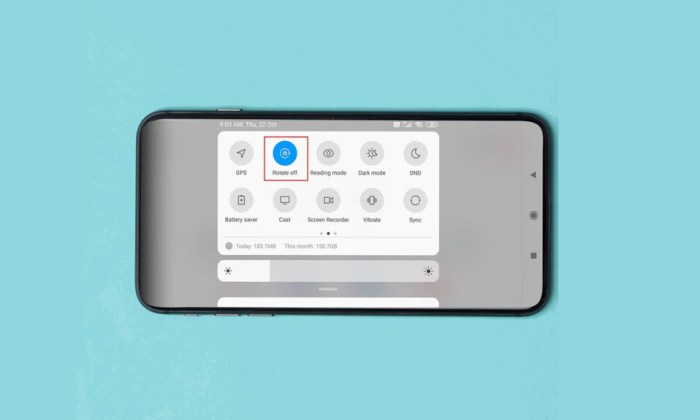
Generally, the gremlins hiding in your telephone’s settings play methods, particularly in the case of how your display behaves. Let’s unravel how show and accessibility options may be the culprits behind your auto-rotate woes. These settings, designed to reinforce consumer expertise, can generally inadvertently intervene with the sensor’s skill to detect orientation modifications.
Font Measurement and Show Zoom Results
Adjusting font dimension and show zoom can impression how the system interprets the display’s orientation. Consider it like this: when you’ve magnified all the things, the system may get confused about what’s “up” and “down.”Here is how these settings can have an effect on auto-rotate:* Font Measurement: Rising the font dimension can change how components are rendered on the display. Whereas indirectly associated to rotation, a considerably bigger font dimension may result in format points that have an effect on how the system handles orientation modifications.
Show Zoom
This function enlarges the complete display, together with icons and textual content. The next zoom degree could make the display seem “fuller,” doubtlessly influencing the auto-rotate performance by altering the system’s calculations of display dimensions and orientation. Think about this situation: you are utilizing a large-font setting whereas studying an e-book. Once you flip your telephone, the format of the textual content may shift erratically as a result of the system is struggling to regulate the magnified content material inside the new orientation.
Accessibility Options Interplay
Accessibility options are designed to make your telephone extra user-friendly, however they will generally conflict with auto-rotate. Many of those options alter how the system interprets consumer enter and show data, and subsequently, they might unintentionally impression the rotation performance.Here is a take a look at a few of the key gamers that might intervene:* TalkBack: This display reader speaks the content material in your display.
Whereas it primarily impacts audio output, it additionally interacts with the show and might doubtlessly trigger conflicts, particularly if it is studying out content material that is being re-rendered throughout a rotation.
Choose to Converse
Just like TalkBack, Choose to Converse reads objects you faucet on the display. Its energetic state may intervene with the auto-rotate performance, particularly if the function is making an attempt to learn out data because the machine rotates.
Coloration Correction
This function adjusts the colours in your display to assist customers with visible impairments. Though it does not straight work together with rotation, in uncommon instances, it’d affect the rendering course of and trigger refined points.
Font and Show Measurement Changes
As mentioned earlier, altering font dimension and show zoom can straight have an effect on how auto-rotate capabilities.
Giant Textual content
This function will increase the scale of textual content throughout the system. This will result in the identical issues as adjusting the font dimension.
Excessive Distinction Textual content
Enhancing textual content distinction can impression the way in which the system renders components, doubtlessly resulting in points.
Troubleshooting Show and Accessibility
To deal with potential points, comply with these steps:* Verify Font Measurement: Navigate to your show settings and scale back the font dimension to the default or a smaller setting. Check auto-rotate.
Alter Show Zoom
Scale back the show zoom degree. Check auto-rotate.
Disable Accessibility Options
Quickly disable TalkBack, Choose to Converse, and some other energetic accessibility options. Check auto-rotate after disabling every function to isolate the potential perpetrator.
Restart Your Gadget
After making any modifications to show or accessibility settings, restart your machine to make sure the modifications take impact.
Replace Your Gadget’s Software program
Guarantee your machine is working the most recent software program model. Updates usually embody bug fixes that tackle points associated to show settings and accessibility options.
Developer Choices and System Tweaks: Android Auto Rotate Not Working
Generally, the answer to our auto-rotate woes lies not within the readily accessible settings, however within the hidden depths of Android’s Developer Choices. These choices, designed primarily for app builders, can supply granular management over system conduct, and, sometimes, they are often the important thing to unlocking a correctly functioning auto-rotate function. Proceed with warning, as modifying these settings with out understanding their implications can result in sudden outcomes.
Consider it like tuning a high-performance engine: it is advisable know what you are doing to keep away from inflicting a breakdown.
Potential Settings to Evaluate inside Developer Choices
Inside the Developer Choices menu, a spread of settings can doubtlessly affect how your machine handles auto-rotate. Here is a breakdown of the important thing areas to analyze:* Window animation scale, Transition animation scale, and Animator length scale: These settings management the velocity of animations. Whereas indirectly associated to auto-rotate, incorrect values can generally trigger the system to behave sluggishly, doubtlessly impacting responsiveness.* Simulate shade area: This setting can alter how colours are displayed in your display.
In uncommon situations, an incorrect setting right here may intervene with the show’s skill to sense its orientation, not directly affecting auto-rotate.* Power RTL format path: This setting forces the format to make use of a right-to-left (RTL) orientation, which is primarily used for languages like Arabic and Hebrew. Whereas unlikely, it may trigger conflicts with the usual auto-rotate performance.* Disable HW overlays: This selection can disable {hardware} overlays, that are used to hurry up show rendering.
Disabling them may, in sure instances, assist resolve display-related points, together with people who may not directly have an effect on auto-rotate. Nevertheless, this setting can even impression efficiency.* Power actions to be resizable: This setting permits apps to be resized, even when they don’t seem to be designed to be. It could actually affect how apps deal with orientation modifications.* Present format bounds: This setting reveals the bounds of various format components.
It may be helpful for debugging show points, although it does not straight have an effect on auto-rotate performance.
Enabling and Disabling Particular Settings for Testing Functions
Let’s discover how you can safely experiment with these settings. First, you will have to allow Developer Choices if you have not already. That is often achieved by navigating to “About telephone” in your machine’s settings and tapping the “Construct quantity” seven instances. As soon as enabled, you will discover “Developer choices” inside your system settings.To check a selected setting, comply with these steps:
1. Determine the setting
Find the setting you wish to check inside the Developer Choices menu. For instance, for instance you wish to check the “Window animation scale” setting.
2. Notice the present worth
Earlier than making any modifications, make a remark of the present worth of the setting. That is essential for reverting again to your unique configuration. It is like taking a “earlier than” image.
3. Modify the setting
Change the setting. For instance, change “Window animation scale” from 1x to 0.5x.
4. Check auto-rotate
Check the auto-rotate performance instantly after altering the setting. Does it behave otherwise? Does it work?
5. Revert and repeat
If the change did not clear up the issue or created new ones, revert the setting again to its unique worth. Then, repeat the method with one other setting.It is essential to check just one setting at a time and doc your outcomes. This systematic strategy will assist you to isolate the reason for the issue and stop you from making a number of modifications you can’t undo.
Keep in mind, all the time revert to the unique setting if the change does not enhance the auto-rotate performance.
Frequent Gadget-Particular Points

Let’s face it, the world of Android gadgets is an unlimited and various panorama, populated by a dizzying array of fashions from a mess of producers. Due to this range, it is hardly stunning that auto-rotate malfunctions can generally manifest in distinctive methods relying on the precise telephone or pill you are utilizing. These points usually stem from producer customizations, {hardware} variations, or software program quirks particular to a specific machine.
Gadget-Particular Options and Workarounds
Customers throughout the Android ecosystem have encountered auto-rotate woes, and the options usually fluctuate relying on the machine in query. Beneath is a desk summarizing frequent points and potential fixes, gleaned from consumer boards, tech assist pages, and troubleshooting guides. This data ought to be thought of as steering, as machine software program and {hardware} can change.
| Gadget Mannequin | Reported Situation | Potential Answer/Workaround | Supply/Reference |
|---|---|---|---|
| Samsung Galaxy S23 Extremely | Auto-rotate failing in particular apps (e.g., Samsung Notes). | Verify app-specific settings for orientation lock. Guarantee ‘Auto Rotate’ permission is granted to the app. Clear cache/information of the affected app. | Samsung Neighborhood Boards, Reddit (r/samsung) |
| Google Pixel 7 Professional | Auto-rotate sometimes unresponsive after system updates. | Restart the machine. Verify for updates to the ‘System UI’ app. Think about manufacturing facility reset if the issue persists. | Google Help, Android Central |
| Xiaomi Redmi Notice 12 | Auto-rotate not working after display protector set up. | Make sure the display protector is not blocking the proximity sensor or gyroscope. Recalibrate the sensor in settings. | Xiaomi Boards, YouTube Tutorials |
| OnePlus 11 | Auto-rotate intermittently failing after prolonged use or throughout particular recreation play. | Verify for system updates. Shut all background apps. Think about using a third-party app to drive auto-rotate. | OnePlus Neighborhood Boards, XDA Builders |
Producer-Particular Settings that Could Influence Auto-Rotate
Past normal Android settings, machine producers usually introduce their very own customizations that may have an effect on auto-rotate performance. These settings are incessantly discovered inside the machine’s “Show” or “Gestures” menu, and even buried inside superior settings. Listed here are some examples:
- Samsung: Samsung gadgets incessantly embody “Movement and Gestures” settings. Search for choices like “Double faucet to wake” or “Raise to wake,” which might generally intervene with auto-rotate, notably if they’re enabled whereas the machine is in a selected orientation. Some Samsung gadgets even have a “One-handed mode” which might lock the display in a specific orientation.
- Xiaomi/MIUI: Xiaomi’s MIUI interface usually options “Pocket mode” or “Stop unintended wake-up” settings. These settings, designed to stop unintended display activations, may additionally have an effect on auto-rotate conduct, particularly when the machine is in a pocket or bag.
- OnePlus: OnePlus gadgets may embody “Navigation gestures” or “Fast gestures” which can have settings affecting the auto-rotate function. Verify these settings and guarantee they don’t seem to be conflicting together with your desired orientation.
- Google Pixel: Pixel telephones usually have a extra streamlined strategy, however the “Faucet to verify telephone” or “Ambient show” options may subtly impression auto-rotate. Guarantee these settings will not be unexpectedly locking the display orientation.
Checking these manufacturer-specific settings is essential. Generally, a seemingly unrelated function can inadvertently intervene with the auto-rotate performance.
Illustrative Examples and Case Research
Let’s delve into real-world situations to light up the complexities of auto-rotate points, offering concrete examples of how seemingly easy actions can set off sudden issues and, extra importantly, how customers can regain management. These case research spotlight the significance of systematic troubleshooting and the often-unpredictable nature of software program and {hardware} interactions.
Situation: Auto-Rotate Failure After App Set up
Think about a consumer, let’s name her Sarah, who lately put in a brand new productiveness app on her Android machine. She was excited to make use of the app’s options, however after the set up, her machine’s auto-rotate performance inexplicably stopped working. This sudden conduct is a typical incidence and highlights the potential for app conflicts to disrupt core system capabilities.
Sarah seen that the display remained stubbornly locked in portrait mode, no matter how she tilted or rotated her telephone.
This was notably irritating when she was making an attempt to observe movies or use apps designed for panorama viewing. She’d already checked the short settings panel, guaranteeing auto-rotate was enabled, however to no avail. The issue appeared to be persistent throughout all purposes, not simply the newly put in one.
Right here’s how Sarah resolved the difficulty:
- Figuring out the Perpetrator: Sarah began by suspecting the brand new app as the foundation trigger. She remembered that it requested a big variety of permissions throughout set up.
- App Uninstallation: As a primary troubleshooting step, Sarah uninstalled the problematic productiveness app. She then restarted her machine to make sure all traces of the app had been eliminated.
- Verification: After the restart, Sarah examined the auto-rotate performance once more. To her aid, it began working as anticipated.
- Different Answer (If Uninstallation Wasn’t Desired): If uninstalling the app wasn’t an possibility, Sarah may have tried clearing the app’s cache and information by means of the machine’s settings. This will generally resolve conflicts. She may even have contacted the app developer to report the difficulty, because the app might need had a bug that was interfering with the system’s settings.
The decision was easy, but efficient, demonstrating the significance of systematically approaching the issue.
Here is an in depth description of the interface modifications Sarah might need noticed throughout her troubleshooting:
The machine’s interface presents a sequence of visible clues. Initially, when the auto-rotate was malfunctioning, the display would stay in portrait mode, with the notification bar and on-screen navigation buttons oriented vertically.
When Sarah tried to rotate the machine, the display wouldn’t regulate, sustaining its portrait orientation.
After uninstalling the app and restarting the machine, the visible modifications grew to become obvious. When Sarah rotated her telephone to panorama orientation, the display instantly adjusted, displaying the content material in a horizontal format. The notification bar and navigation buttons rotated accordingly. The settings menu, the place auto-rotate performance is enabled, would show a inexperienced checkmark subsequent to the “Auto-rotate display” possibility, indicating that the function was energetic.
