Embark on an thrilling journey as we delve into the fascinating realm of load android on raspberry pi. Think about remodeling your tiny, but mighty, Raspberry Pi into a flexible powerhouse able to operating the Android working system. This is not only a technical train; it is a gateway to unlocking a universe of prospects. From remodeling your Pi right into a smooth media heart to experimenting with embedded programs and even creating your personal moveable gaming console, the potential is proscribed solely by your creativeness.
Put together to unravel the secrets and techniques of this outstanding fusion of {hardware} and software program, the place innovation meets simplicity.
This challenge opens doorways to a world of prospects, from reviving older units to creating distinctive tasks. You will study concerning the crucial {hardware}, from deciding on the suitable Raspberry Pi mannequin and SD card to making sure you’ve an appropriate energy provide. We’ll discover numerous Android distributions tailor-made for the Raspberry Pi, serving to you select the proper match in your wants.
We’ll information you thru getting ready the SD card, putting in Android, and configuring your system, turning you into a real Android aficionado. We’ll additionally dive into customization, tweaking, and troubleshooting, guaranteeing you may navigate any challenges that come your method. So, let’s get began!
Introduction: Working Android on Raspberry Pi: Load Android On Raspberry Pi
Embarking on the journey of operating Android on a Raspberry Pi is akin to respiration new life right into a trusty previous pal. This challenge means that you can rework a small, inexpensive laptop into a flexible gadget able to a mess of duties. It opens doorways to prospects you won’t have thought-about earlier than, marrying the familiarity of Android with the flexibleness of the Raspberry Pi.
Idea Overview: Android on a Miniature Laptop
The basic idea is surprisingly simple: putting in and operating the Android working system on a Raspberry Pi. As a substitute of the everyday Linux-based working programs normally discovered on these single-board computer systems, you may be booting into a well-known Android setting. This implies you may entry the Google Play Retailer, run Android functions, and make the most of the consumer interface you understand and love, all throughout the confines of a compact and energy-efficient gadget.
Motivations and Use Circumstances: Unleashing Potential, Load android on raspberry pi
The attract of operating Android on a Raspberry Pi stems from its potential functions. The challenge is not nearly technical feasibility; it is about unlocking artistic options. Contemplate these prospects:
- Media Middle: Remodel your Raspberry Pi right into a devoted media heart. Android’s app ecosystem affords a plethora of streaming providers and media participant functions, permitting you to entry motion pictures, TV exhibits, and music from a single, centralized location.
- Embedded Techniques: Android’s versatility makes it a powerful contender for embedded system functions. It is a succesful platform for operating functions that require a graphical consumer interface and community connectivity, akin to controlling house automation units or monitoring environmental sensors.
- Gaming: Whereas the Raspberry Pi’s graphics capabilities are restricted in comparison with high-end gaming PCs, it may well nonetheless run many Android video games. This opens the door to retro gaming experiences or informal gaming on a funds.
- Digital Signage: Android’s ease of use and available digital signage functions make it superb for displaying info, ads, or bulletins in numerous settings.
- IoT Tasks: The Android OS, with its inherent networking capabilities, is a superb alternative for Web of Issues tasks. It facilitates straightforward integration with sensors, actuators, and different units.
{Hardware} Necessities: Assembling the Items
To embark on this endeavor, you may want the next parts. Choosing the suitable {hardware} will impression the efficiency and general expertise.
- Raspberry Pi: The precise mannequin of Raspberry Pi you select will affect efficiency. The Raspberry Pi 3 Mannequin B, Raspberry Pi 3 Mannequin B+, and Raspberry Pi 4 Mannequin B are widespread decisions. The Raspberry Pi 4 usually affords the perfect efficiency.
- MicroSD Card: This serves because the storage medium for the Android working system. A quick microSD card (Class 10 or UHS-I) is really useful for optimum efficiency. Contemplate a capability of a minimum of 16GB, and ideally 32GB or extra, to accommodate the working system and functions.
- Energy Provide: A dependable energy provide is essential. It ought to present adequate present to the Raspberry Pi to forestall instability and guarantee correct operation. The official Raspberry Pi energy provide is a protected guess. Guarantee the ability provide matches the Raspberry Pi mannequin’s necessities (e.g., USB-C for the Raspberry Pi 4).
- Monitor: A show is critical to visualise the Android interface. You should use an HDMI monitor.
- Keyboard and Mouse: A keyboard and mouse are important for interacting with the Android interface. You should use USB or Bluetooth peripherals.
- Non-obligatory Peripherals:
- Ethernet Cable or Wi-Fi Adapter: For community connectivity. Most Raspberry Pi fashions have built-in Wi-Fi, however a wired connection is usually extra steady.
- Case: A case protects the Raspberry Pi from bodily harm.
{Hardware} Necessities and Compatibility
Embarking on the journey of operating Android on a Raspberry Pi necessitates a cautious choice of {hardware}. The precise parts are crucial for a clean and fulfilling expertise. Let’s delve into the important parts that may rework your Pi right into a pocket-sized Android powerhouse.
Suitable Raspberry Pi Fashions
Choosing the right Raspberry Pi mannequin is step one. Not all Pi fashions are created equal with regards to Android compatibility. Efficiency varies, and understanding the capabilities of every mannequin will affect your general expertise.
- Raspberry Pi 3 Mannequin B+: A stable place to begin, providing an honest stability of efficiency and affordability. It is a viable possibility for primary Android duties.
- Raspberry Pi 4 Mannequin B: This mannequin represents a big leap in efficiency, making it the popular alternative for a extra responsive and feature-rich Android expertise. It handles demanding functions and multitasking extra effectively. Obtainable in numerous RAM configurations (2GB, 4GB, and 8GB), with increased RAM providing higher efficiency.
- Raspberry Pi 400: Primarily a Raspberry Pi 4 built-in right into a keyboard, the Pi 400 affords comparable efficiency traits to the Pi 4 Mannequin B, however in a extra compact and user-friendly type issue.
SD Card Specs
The SD card acts as the first storage for the Android working system and your functions. The pace and reliability of the SD card instantly impression the responsiveness of your Android expertise. Selecting properly is paramount.
- Minimal Specs: Intention for a Class 10 or UHS-I (Extremely Excessive Pace) SD card with a minimal capability of 16GB. Nonetheless, take into account a bigger capability (32GB or extra) to accommodate the Android system, apps, and information.
- Advisable Manufacturers and Sorts: SanDisk (Excessive or Excessive Professional sequence), Samsung (EVO or Professional Plus sequence), and Kingston (Canvas React or Canvas Go! Plus sequence) are all respected manufacturers that supply high-performance SD playing cards. Contemplate playing cards optimized for “Software Efficiency Class” (A1 or A2) for improved app loading and multitasking. The A2 commonplace offers enhanced random learn/write speeds, contributing to a smoother general expertise.
Energy Provide Necessities
A steady and adequate energy provide is totally essential for the correct functioning of your Raspberry Pi and, by extension, your Android set up. Undervoltage can result in crashes, information corruption, and common instability. Consider it because the lifeblood of your system.
- Voltage and Amperage: The Raspberry Pi sometimes requires a 5V energy provide. The amperage requirement varies relying on the mannequin and the peripherals related.
- Particular Suggestions: For the Raspberry Pi 3B+, a 2.5A energy provide is usually adequate. The Raspberry Pi 4, attributable to its elevated energy calls for, advantages from a 3A energy provide. Utilizing an influence provide with the next amperage than crucial will not hurt the Pi; it simply ensures that it has ample energy out there, particularly when operating demanding Android functions.
- Issues: All the time use a high-quality energy provide from a good producer. Keep away from utilizing cellphone chargers or different energy sources that aren’t particularly designed for the Raspberry Pi, as they could not present adequate energy or could have insufficient safety towards voltage fluctuations.
Raspberry Pi Mannequin Comparability for Android
The next desk offers a concise comparability of various Raspberry Pi fashions and their suitability for operating Android. This comparability helps you consider the trade-offs between value, efficiency, and general consumer expertise.
| Mannequin | CPU | RAM | Potential Efficiency |
|---|---|---|---|
| Raspberry Pi 3 Mannequin B+ | 1.4GHz 64-bit quad-core ARM Cortex-A53 | 1GB | Good for primary Android use, internet looking, and easy functions. Might expertise lag with demanding apps or multitasking. |
| Raspberry Pi 4 Mannequin B | 1.5GHz (or 1.8GHz in some revisions) 64-bit quad-core ARM Cortex-A72 | 2GB, 4GB, or 8GB | Considerably improved efficiency. Handles most Android functions with ease. The 4GB and 8GB RAM variations are really useful for a smoother expertise, particularly with multitasking or gaming. |
| Raspberry Pi 400 | 1.8GHz 64-bit quad-core ARM Cortex-A72 | 4GB | Related efficiency to the Raspberry Pi 4 Mannequin B, however built-in right into a keyboard. Glorious for common Android use, together with productiveness duties and media consumption. |
Selecting an Android Distribution
Alright, you’ve got acquired your Raspberry Pi, you are itching to run Android, however now you are confronted with a buffet of choices. Don’t be concerned, it is not as daunting because it appears. Consider it like choosing a taste of ice cream – every one affords a singular expertise. This part breaks down the Android flavors out there in your Pi, serving to you select the proper scoop in your challenge.
Obtainable Android Distributions
Let’s dive into the primary contenders vying for a spot in your Raspberry Pi. You will discover just a few distinguished Android distributions tailor-made for the platform, every with its personal strengths and weaknesses. The choice won’t be as huge because the Android ecosystem for telephones, however there’s nonetheless a lot to select from.
- LineageOS: LineageOS is a community-driven, open-source Android distribution. It is constructed on the Android Open Supply Challenge (AOSP) and affords a clear, customizable expertise, typically with up to date options and safety patches. Consider it as a custom-built Android, stripped of bloatware and geared in direction of efficiency.
- Android Issues: Whereas formally discontinued, Android Issues was Google’s working system designed for Web of Issues (IoT) units. It was optimized for embedded programs and supplied instruments for constructing related units. Though now not actively developed, you may nonetheless discover legacy photos and group tasks utilizing it. It was designed to run on resource-constrained units, specializing in stability and ease.
- Android x86: That is an open-source challenge that ports Android to the x86 structure. Whereas primarily aimed toward PCs, it may well generally be tailored to run on Raspberry Pi. Efficiency can range, and compatibility is not all the time assured. It offers a extra “inventory” Android expertise, much like what you’d discover on a cellphone or pill.
Options, Advantages, Stability, and Group Help of Every Distribution
Now, let’s evaluate these distributions to see what makes them tick, specializing in what issues most: options, stability, and the serving to hand of the group.
- LineageOS:
- Options: Gives a big selection of customization choices, common updates, and infrequently contains options not present in inventory Android. You get a extremely configurable expertise.
- Advantages: Glorious efficiency attributable to its lean design. Safety patches are sometimes launched promptly. Energetic group assist means you are more likely to discover assist if you happen to run into issues.
- Stability: Can range relying on the precise construct and the Raspberry Pi mannequin. Nonetheless, community-maintained builds are sometimes fairly steady.
- Group Help: LineageOS boasts a big and energetic group, providing ample documentation, boards, and troubleshooting guides. This can be a large plus for novices.
- Android Issues:
- Options: Designed for IoT units, it targeted on simplicity and ease of growth for embedded programs. It included instruments for managing related units and integrating with cloud providers.
- Advantages: Optimized for resource-constrained units, providing a light-weight and environment friendly working system. It was designed to streamline the event course of for IoT functions.
- Stability: Usually steady, because it was designed for embedded programs the place reliability is essential. Nonetheless, with its discontinuation, safety updates are now not supplied.
- Group Help: Help is proscribed now attributable to its discontinuation. You may discover some legacy documentation and group tasks.
- Android x86:
- Options: Offers a inventory Android expertise, much like what you’d discover on a cellphone or pill. It means that you can run a variety of Android functions.
- Advantages: Gives compatibility with an unlimited library of Android apps. You get a well-known Android interface.
- Stability: Could be much less steady on Raspberry Pi in comparison with distributions particularly designed for it. Efficiency could be inconsistent.
- Group Help: Help is principally targeted on the x86 structure, and assist for Raspberry Pi is likely to be restricted. You might must depend on common Android x86 sources.
Components for Choosing a Distribution Based mostly on Challenge Objectives
Choosing the proper Android distribution hinges in your challenge targets. Contemplate these components to information your determination:
- Challenge Kind: Are you constructing a media heart, a wise house hub, or an IoT gadget? Your challenge’s function dictates the mandatory options and efficiency necessities.
- Efficiency Necessities: In case your challenge calls for clean efficiency and quick responsiveness, a light-weight distribution like LineageOS is an efficient alternative.
- Customization Wants: If you happen to want a extremely customizable expertise, LineageOS affords intensive choices.
- Group Help: Sturdy group assist is essential, particularly for novices. LineageOS excels on this space.
- Ease of Use: Contemplate the set up course of and the consumer interface. Some distributions are simpler to arrange and use than others.
- Safety: Common safety updates are important. LineageOS offers this by means of its community-driven updates.
Figuring out Up-to-Date and Actively Maintained Android Distributions
Staying up-to-date with the newest and most actively maintained Android distributions is crucial for safety and efficiency. Right here’s the right way to spot the keepers:
- Verify the Official Web site and Boards: Search for an official web site or discussion board devoted to the distribution for Raspberry Pi. Energetic boards with current posts and group exercise are signal.
- Evaluate the Changelogs and Launch Notes: Common updates and detailed changelogs point out that the distribution is actively maintained.
- Search for Group Involvement: A vibrant group is a key indicator. Verify for energetic builders, bug experiences, and consumer assist on boards and social media.
- Confirm Construct Dates: Verify the construct dates of the out there photos. Latest builds recommend energetic growth and upkeep.
- Assess Safety Patch Frequency: Verify how typically safety patches are launched. Common updates are an indication of a well-maintained distribution.
Getting ready the SD Card

Alright, you’ve got chosen your Android distribution and have your Raspberry Pi {hardware} able to roll. Now comes the essential step: getting that Android goodness onto your SD card. That is the place the magic (or a minimum of, the preliminary boot course of) occurs. Consider it as fastidiously transferring the digital blueprints of your Android system onto the bodily basis of your SD card.
A well-prepared SD card is the cornerstone of a clean Android expertise in your Pi.
Downloading the Android Distribution’s Picture File
First issues first: you want the picture file. That is primarily a compressed bundle containing all the mandatory information to run Android in your Raspberry Pi. The method for downloading it varies barely relying on the distribution you’ve got chosen, however the common precept stays the identical. You will sometimes discover the picture file on the distribution’s official web site or a devoted obtain web page.
These web sites will typically present direct obtain hyperlinks, generally alongside checksums for verifying the integrity of the downloaded file. It’s kind of like ordering a pizza – you want the suitable components (the picture file) to get the ultimate product (Android operating in your Pi). All the time make sure you obtain the right picture file in your particular Raspberry Pi mannequin. Incorrect information can result in loads of frustration, or worse, render your SD card unusable.
Strategies for Flashing the Picture onto the SD Card
Now, how do you get that picture file onto the SD card? That is the place flashing instruments come into play. These are specialised software program functions designed to put in writing the picture file on to the SD card, successfully changing every thing that is at present on it. Consider it like a digital stencil, transferring the Android working system onto the clean canvas of your SD card.
A number of instruments can be found, every with its personal benefits.One of the vital widespread decisions is Etcher (also referred to as balenaEtcher). It is user-friendly, cross-platform (works on Home windows, macOS, and Linux), and usually dependable. Rufus is one other wonderful possibility, particularly for Home windows customers. It is identified for its pace and suppleness. Different choices exist, however Etcher and Rufus are usually the go-to decisions for his or her ease of use and widespread assist.
The selection is dependent upon your working system and private desire.
Step-by-Step Process for Getting ready the SD Card Utilizing Etcher
Let’s stroll by means of the method of utilizing Etcher, as it is a widespread and easy alternative. Think about this as a recipe; comply with the steps, and you will have a wonderfully “cooked” SD card.
- Obtain and Set up Etcher: First, head over to the official Etcher web site (balena.io/etcher) and obtain the model appropriate together with your working system. Set up it such as you would every other software.
- Insert Your SD Card: Insert your SD card into your laptop’s SD card reader.
- Choose the Picture: Open Etcher. Click on on “Flash from file” and browse to the Android picture file you downloaded earlier. Choose the picture file.
- Choose the Goal: Etcher ought to routinely detect your SD card. If it would not, click on “Choose goal” and select your SD card from the listing. Double-check that you’ve got chosen the right drive! Selecting the improper drive can result in information loss.
- Flash the Picture: Click on “Flash!” Etcher will now start writing the picture to your SD card. This course of can take a couple of minutes, relying on the dimensions of the picture file and the pace of your SD card. Be affected person and let it full.
- Verification: As soon as the flashing course of is full, Etcher will routinely confirm the picture to make sure it was written accurately. That is a vital step to forestall points throughout boot.
- Eject the SD Card: As soon as the verification is full, Etcher will let you know it is protected to take away the SD card. Eject the SD card out of your laptop. You are now able to insert it into your Raspberry Pi.
Demonstrating Methods to Confirm the Integrity of the Downloaded Picture File Earlier than Flashing
Earlier than you even begin flashing, it is smart to confirm the integrity of the downloaded picture file. This prevents corrupted downloads, which might result in boot failures and wasted time. This verification course of includes evaluating a calculated “checksum” of your downloaded file with a checksum supplied by the distribution. Consider checksums as digital fingerprints; they uniquely establish a file. If the fingerprints match, the file is probably going intact.
There are a number of strategies for verifying the picture file:
- Utilizing Checksums Supplied by the Distribution: Most Android distribution web sites present a checksum alongside the picture file obtain hyperlink. That is normally a SHA-256 or MD5 hash.
- Utilizing Command-Line Instruments: On Linux and macOS, you should utilize the command-line instruments like `sha256sum` or `md5sum` to generate the checksum of your downloaded picture file. On Home windows, you should utilize instruments like CertUtil or PowerShell’s `Get-FileHash` command.
- Instance utilizing `sha256sum` (Linux/macOS): Open your terminal or command immediate. Navigate to the listing the place you downloaded the picture file. Then, sort the next command, changing `android_image.img.xz` with the precise title of your picture file:
- The command will generate a protracted string of characters. Examine this string to the SHA-256 hash supplied on the obtain web page of the Android distribution. In the event that they match, your obtain is verified.
- Instance utilizing CertUtil (Home windows): Open Command Immediate. Navigate to the listing the place you downloaded the picture file. Then, sort the next command, changing `android_image.img.xz` with the precise title of your picture file:
- The command will generate a protracted string of characters. Examine this string to the SHA-256 hash supplied on the obtain web page of the Android distribution. In the event that they match, your obtain is verified.
sha256sum android_image.img.xz
CertUtil -hashfile android_image.img.xz SHA256
If the checksums do not match, your obtain is corrupted. On this case, obtain the picture file once more and repeat the verification course of. All the time confirm the picture earlier than flashing to save lots of your self potential complications.
Putting in Android on Raspberry Pi
Now that you’ve got prepped your SD card and chosen your Android distribution, the second of fact has arrived! It is time to get Android up and operating in your Raspberry Pi. This course of, whereas seemingly daunting, is an easy sequence of steps. Consider it as a scrumptious recipe – comply with the directions, and you will have a tasty consequence.
Inserting the SD Card
The primary bodily step is extremely easy. It is akin to inserting a reminiscence card into your digital digital camera – just a bit extra strong. The SD card slot in your Raspberry Pi is normally situated on the underside of the board. The slot’s design varies barely relying in your Raspberry Pi mannequin, however the precept stays the identical.The next steps present an outline:
- Find the SD Card Slot: Look at your Raspberry Pi board. The slot is often a small, rectangular opening.
- Orient the SD Card: The SD card has a notched edge. Guarantee this notch aligns with the corresponding characteristic within the SD card slot. That is essential for proper insertion.
- Insert the SD Card: Gently push the SD card into the slot. It’s best to really feel a slight click on because it locks into place. If you happen to encounter resistance, do not drive it; recheck the orientation.
- Safe the SD Card (if relevant): Some Raspberry Pi circumstances could require further steps to safe the SD card. Seek the advice of your case’s documentation for particular directions.
Boot Course of and First Boot Expertise
The boot course of is the digital equal of a plant sprouting from a seed. It is the preliminary sequence of occasions that brings your Android system to life on the Raspberry Pi. This course of will take a couple of minutes on the primary boot. Be affected person, as that is when the system initializes.Here is a breakdown of what to anticipate:
- Energy Up: Join your Raspberry Pi to an influence supply. The Raspberry Pi will start to attract energy, and the boot course of commences.
- Preliminary Firmware Loading: The Raspberry Pi’s firmware, a primary set of directions saved on the board, begins to load. This units the stage for the working system to load.
- Android OS Loading: The Android working system, now on the SD card, is loaded. You will note a sequence of messages in your related show. These messages typically embody the title of the Android distribution and model.
- Kernel Initialization: The Android kernel, the core of the working system, begins. It manages the {hardware} and offers the inspiration for all software program.
- System Companies Startup: Important Android system providers are initiated. These embody the consumer interface (UI), networking, and different core parts.
- Preliminary Configuration: On the primary boot, you’ll doubtless be prompted to configure Android. This may contain deciding on your language, connecting to Wi-Fi, and organising your Google account.
- Residence Display Look: After the configuration is full, you’ll arrive on the Android house display screen. This marks the profitable completion of the boot course of.
Troubleshooting Widespread Boot Points
Generally, issues do not go as deliberate. Booting your Android on the Raspberry Pi can encounter points. Fortuitously, most of those are solvable with somewhat detective work. Contemplate these widespread issues and their potential options:
- No Show: This is without doubt one of the most frequent issues. Guarantee your Raspberry Pi is accurately related to a monitor or TV by way of HDMI. Confirm the show is powered on and set to the right enter supply. Attempt a special HDMI cable and port if doable. Additionally, make sure that the Android distribution you’ve got chosen helps your show decision.
- Boot Loops: A boot loop happens when the Raspberry Pi restarts repeatedly with out totally loading Android. This typically factors to a difficulty with the Android picture on the SD card. Re-flash the SD card with the Android distribution picture, guaranteeing the picture is downloaded accurately. Additionally, take into account the compatibility of your Raspberry Pi mannequin with the Android distribution you might be utilizing.
Some distributions could also be optimized for sure fashions.
- Frozen Boot Display: If the Raspberry Pi seems to freeze in the course of the boot course of, it could be caught on a selected step. This may be brought on by numerous points, akin to a corrupted SD card or an incompatible Android distribution. Attempt re-flashing the SD card and selecting a special Android distribution.
- Community Connectivity Points: If you cannot connect with Wi-Fi, double-check your Wi-Fi configuration settings in the course of the preliminary setup. Guarantee your community title (SSID) and password are appropriate. If you happen to’re utilizing a wired connection, confirm the Ethernet cable is securely related to each the Raspberry Pi and your router.
- Touchscreen Points: In case you are utilizing a touchscreen show, it won’t work instantly. Verify the documentation in your particular Android distribution to find out if it’s essential to set up any drivers or configure settings to allow touchscreen performance.
Accessing the Android System
As soon as Android efficiently boots, you are able to work together with it. Navigating the system in your Raspberry Pi is much like utilizing Android on a cellphone or pill. Right here’s a primary information:
- Preliminary Setup: Upon first boot, you may undergo the preliminary setup course of. This contains deciding on your language, connecting to Wi-Fi, and signing in to your Google account (if desired).
- Residence Display Navigation: The house display screen is your central hub. From right here, you may entry apps, widgets, and settings. Use a mouse and keyboard related to the Raspberry Pi to navigate. If you happen to’re utilizing a touchscreen, merely faucet to work together.
- App Set up: You’ll be able to set up apps from the Google Play Retailer or sideload APK information. Take into account that not all apps are optimized for the Raspberry Pi’s {hardware}, and efficiency could range.
- Settings and Customization: Entry the settings menu to customise your Android expertise. You’ll be able to regulate show settings, community settings, sound settings, and extra.
- Shutdown and Reboot: To close down or reboot your Raspberry Pi, use the suitable choices throughout the Android system. This ensures that the system is correctly shut down, stopping information loss or corruption.
Preliminary Setup and Configuration
Now that you’ve got efficiently flashed your Android distribution onto your Raspberry Pi, it is time to get issues up and operating. This preliminary setup is essential, serving as the inspiration in your Android expertise on the Pi. Consider it because the grand unveiling, the second your digital creation involves life! We’ll information you thru the necessities, from connecting to your Wi-Fi community to optimizing efficiency.
Configuring Preliminary Android Setup: Wi-Fi, Google Account, and Language
The primary boot-up expertise in your Raspberry Pi operating Android ought to really feel acquainted, very like organising a brand new Android cellphone or pill. The system will stroll you thru the essential configuration steps.Here is a breakdown of what to anticipate:
- Wi-Fi Configuration: The system will immediate you to connect with a Wi-Fi community. Choose your community from the listing of obtainable networks and enter the password. That is important for accessing the web, downloading apps, and syncing your information.
- Google Account Setup: You will be requested to register together with your Google account. If you have already got one, enter your e mail and password. If not, you may create a brand new account. This step means that you can entry Google providers just like the Play Retailer, Gmail, and Google Drive.
- Language and Enter Preferences: Select your most well-liked language and keyboard format. This may tailor the consumer interface and enter strategies to your liking.
- Date and Time Settings: The system will try and routinely set the date and time primarily based in your location and community connection. You’ll be able to manually regulate these settings if crucial.
Putting in Important Apps and Software program
As soon as you’ve got accomplished the preliminary setup, you may need to load up your Raspberry Pi with the apps and software program that make Android shine. The Google Play Retailer is your main useful resource for this.The next apps are extremely really useful to get you began:
- Important Communication: Set up messaging apps like WhatsApp or Telegram, and e mail purchasers like Gmail or Outlook to remain related.
- Productiveness Instruments: Contemplate putting in workplace suite apps like Google Docs, Sheets, and Slides, or Microsoft Workplace Cellular for doc creation and enhancing.
- Internet Searching: Obtain an online browser like Chrome or Firefox to entry the web.
- File Supervisor: A file supervisor app (like Strong Explorer or Information by Google) is invaluable for managing information and folders in your gadget.
- Media Gamers: Set up a media participant like VLC or MX Participant to get pleasure from your movies and music.
- Safety and Utilities: A safety app, akin to a good antivirus program, can assist defend your gadget. Moreover, utility apps for system monitoring and cleansing could be helpful.
Bear in mind to maintain your apps up to date to make sure optimum efficiency and safety.
Optimizing Android’s Efficiency on the Raspberry Pi
Working Android on a Raspberry Pi is a trade-off. You are bringing a robust cellular working system to a small, resource-constrained gadget. Optimization is essential to a clean expertise.Here is the right way to improve efficiency:
- Select the Proper Distribution: Some Android distributions are particularly optimized for the Raspberry Pi. Analysis and choose a distribution identified for its efficiency on the Pi.
- Overclocking (Use with Warning): Overclocking the Raspberry Pi’s processor can enhance efficiency, however it may well additionally generate extra warmth and doubtlessly harm the gadget. Solely do that if you happen to perceive the dangers. Monitor the temperature intently.
- Disable Animations and Transitions: Lowering or disabling animations and transitions within the Android settings can considerably enhance responsiveness. Go to Developer Choices (you may must allow them by tapping the “Construct quantity” in “About cellphone” settings a number of occasions) and regulate animation scales.
- Restrict Background Processes: In Developer Choices, you may restrict the variety of background processes. This frees up RAM and improves efficiency, particularly on units with restricted reminiscence.
- Use Light-weight Apps: Select light-weight variations of apps at any time when doable. For instance, use a lite model of a social media app.
- Clear Cache Frequently: Clear the cache of apps recurrently to unencumber cupboard space and enhance efficiency.
Connecting Peripherals: Keyboard, Mouse, and Show
Connecting peripherals is crucial for interacting with Android in your Raspberry Pi. The setup is usually simple.Here is what it’s essential to know:
- Keyboard and Mouse: Most Raspberry Pis have USB ports. Merely plug in your USB keyboard and mouse. Bluetooth keyboards and mice will also be related, however you may must allow Bluetooth in Android settings.
- Show: Join your Raspberry Pi to a show utilizing an HDMI cable. Guarantee your show helps the decision you’ve got arrange in Android.
- Energy Provide: Guarantee you might be utilizing a high-quality energy provide. A weak energy provide can result in efficiency points and instability. An influence provide that gives a minimum of 2.5A is really useful, and 3A is usually most well-liked.
- Troubleshooting Show Points: If you happen to’re having hassle with the show, attempt the next:
- Verify the HDMI cable.
- Attempt a special HDMI port in your show.
- Guarantee your show helps the decision set by Android.
- Edit the `config.txt` file on the SD card to drive a particular decision (superior).
Customization and Tweaking
Alright, you’ve got acquired Android operating in your Raspberry Pi! Now comes the enjoyable half: making ityours*. This part is all about personalizing your Android expertise and squeezing each final drop of efficiency out of your little laptop. We’ll delve into the nitty-gritty of interface tweaks, efficiency optimization, and even somewhat little bit of overclocking – however be warned, proceed with warning! Let’s get began on remodeling your Raspberry Pi into the Android powerhouse you’ve got all the time dreamed of.
Customizing the Android Interface for Optimum Person Expertise
The inventory Android interface, whereas useful, won’t be probably the most optimized for a Raspberry Pi’s show and your private preferences. Tailoring the interface is essential to a clean and fulfilling expertise. This includes adjusting visible parts, app layouts, and general navigation to suit your wants.
- Adjusting Show Settings: Effective-tune the show settings to match your display screen. This contains decision, display screen density (DPI), and font sizes. Reducing the DPI could make parts seem bigger and simpler to see on a smaller display screen. Think about using the Raspberry Pi’s native decision for optimum efficiency.
- Utilizing Customized Themes and Wallpapers: Android permits for intensive theming. Discover themes which are light-weight and designed for efficiency. Darkish themes may save battery life and cut back eye pressure. Obtain quite a lot of wallpapers and discover the one which resonates with you.
- Customizing the Launcher: The launcher is the house display screen interface. Android affords numerous launcher choices, permitting for vital customization of app layouts, icon types, and widgets. We’ll discover this additional within the subsequent .
- Adjusting Navigation: Think about using navigation gestures as a substitute of the normal navigation buttons. This could unencumber display screen house and enhance the general consumer expertise.
- Widget Choice: Widgets can present fast entry to info and functionalities. Nonetheless, too many widgets can impression efficiency. Choose widgets judiciously, prioritizing these you employ most incessantly.
Ideas for Adjusting Settings to Enhance Efficiency
Optimizing Android’s efficiency on the Raspberry Pi is essential for a fluid consumer expertise. A number of settings could be tweaked to scale back lag and enhance responsiveness. Here is the right way to make your Android system sing.
- Disabling Animations: Animations, whereas visually interesting, eat processing energy. Disabling or lowering animation scales can considerably enhance efficiency. Navigate to Developer Choices (you could must allow them by tapping the “Construct quantity” in “About cellphone” a number of occasions) and regulate “Window animation scale,” “Transition animation scale,” and “Animator period scale” to “.5x” or disable them altogether.
- Limiting Background Processes: Android permits apps to run within the background, consuming sources. Restrict background processes to enhance efficiency. In Developer Choices, discover “Background course of restrict” and set it to an inexpensive variety of processes, akin to “No background processes” or “At most 4 processes,” relying in your utilization.
- Optimizing App Settings: Some apps provide efficiency settings inside their very own configuration menus. Evaluate and optimize these settings. For instance, disable animations or cut back the picture high quality in apps like video games or video gamers.
- Utilizing a Light-weight Launcher: As beforehand talked about, the launcher can impression efficiency. Go for a light-weight launcher that consumes fewer sources. Choices like “Lawnchair” or “Nova Launcher” (with cautious configuration) could be good decisions.
- Clearing Cache and Information: Periodically clear the cache and information of apps, notably these which are incessantly used or eat loads of storage. This can assist to forestall efficiency degradation over time.
Strategies for Overclocking the Raspberry Pi to Enhance Android’s Efficiency
Overclocking includes operating the Raspberry Pi’s processor at the next clock pace than its default. This could enhance efficiency but in addition introduces dangers.
Warning: Overclocking can doubtlessly harm your Raspberry Pi and void its guarantee. It could additionally result in instability, overheating, and information corruption. Proceed with excessive warning, and monitor temperatures intently. All the time analysis the precise overclocking limits and security measures in your Raspberry Pi mannequin.
Earlier than you start, guarantee you’ve high quality energy provide and ample cooling (e.g., a heatsink or fan). Incorrect energy provide or insufficient cooling can drastically improve the dangers related to overclocking.
To overclock, you may sometimes modify the config.txt file on the SD card’s boot partition. This file accommodates numerous settings that management the Raspberry Pi’s habits. Open the file in a textual content editor in your laptop (after correctly mounting the SD card). Find the settings associated to the CPU clock pace (e.g., over_voltage, arm_freq, gpu_freq). Regulate these values cautiously, beginning with small increments.
Here is an instance of some widespread settings, although the optimum values will rely in your particular Raspberry Pi mannequin and cooling resolution:
over_voltage=2(or increased, however fastidiously – this will increase voltage to the CPU, and dangers harm if extreme)
arm_freq=1400(That is the ARM CPU clock pace in MHz. Begin low and improve regularly. For instance, the Raspberry Pi 3 B+ can typically be safely overclocked to 1.4 GHz and even increased, relying on the person chip high quality.)
gpu_freq=500(That is the GPU clock pace in MHz. Once more, begin low and improve regularly. A better GPU clock pace can enhance graphics efficiency.)
Save the config.txt file and safely eject the SD card. Insert the SD card again into the Raspberry Pi and boot it up. Monitor the temperature of the CPU. If the system turns into unstable or crashes, revert to the earlier settings or decrease the clock speeds. Think about using monitoring instruments to look at the CPU temperature whereas the system is operating.
If temperatures exceed protected ranges (sometimes round 80°C or 176°F), cut back the overclock or enhance cooling.
Information for Putting in and Configuring Various Launchers or Person Interfaces
Selecting a {custom} launcher can dramatically alter your Android expertise on the Raspberry Pi, providing extra management and customization. Right here’s a information to get you began.
First, it’s essential to obtain and set up a launcher. You’ll be able to sometimes discover launchers on the Google Play Retailer (you probably have Google Play Companies put in) or by means of APK information downloaded from trusted sources. Fashionable choices embody Nova Launcher, Lawnchair, and Motion Launcher. Contemplate launchers particularly designed for efficiency on lower-powered units. The set up course of is easy, much like putting in every other Android app.
After putting in the launcher, you’ll be prompted to pick out it as your default launcher. If not, go to Settings -> Apps -> Default apps -> Residence app and select your most well-liked launcher. As soon as the brand new launcher is ready because the default, you can begin customizing it.
- Customizing the Residence Display: Organize apps, widgets, and shortcuts on your property display screen to fit your wants. Most launchers mean you can create folders, change icon sizes, and modify grid layouts.
- Adjusting Launcher Settings: Discover the launcher’s settings menu. You’ll be able to typically customise the app drawer, gesture controls, icon packs, and extra. Experiment with completely different settings to search out what works finest for you. Disable animations if efficiency is a priority.
- Optimizing for Efficiency: Some launchers provide performance-related settings. For instance, you may disable animations, cut back transparency results, or restrict the variety of apps within the app drawer.
- Experimenting with Icon Packs: Icon packs mean you can change the looks of your app icons. Select icon packs which are light-weight and visually interesting.
- Backing Up Your Configuration: Most launchers mean you can again up your configuration. This can be a good concept in case it’s essential to reinstall the launcher or swap to a special gadget.
Software program and App Compatibility
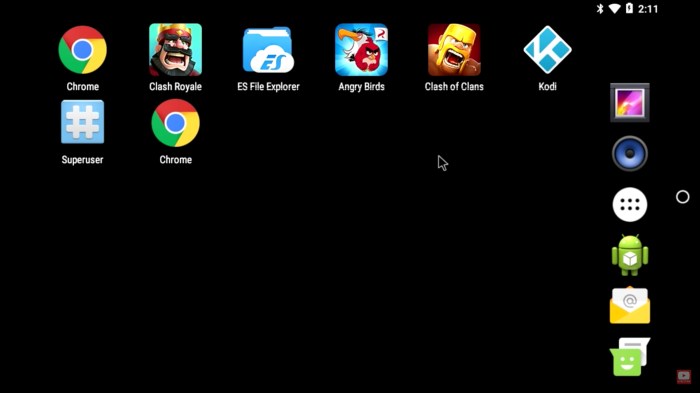
Navigating the world of Android in your Raspberry Pi means understanding how effectively your favourite apps will play good with the {hardware}. It’s kind of like inviting buddies over – some are good company, others may want somewhat further consideration. This part delves into the compatibility of Android functions on the Raspberry Pi, serving to you curate the absolute best expertise.
Compatibility with Raspberry Pi Structure
The Raspberry Pi, not like most Android units you are conversant in, sometimes makes use of an ARM-based processor. That is the core distinction. Most Android telephones and tablets are additionally ARM-based, so in concept, many apps ought to work. Nonetheless, the precise ARM structure and the shortage of sure {hardware} parts (like a devoted graphics processing unit, or GPU, present in some high-end Android units) can result in compatibility points.
Which means whereas the Android working system itself runs, some apps may wrestle to perform optimally.
Figuring out Suitable and Problematic Apps
Deciding which apps will shine and which is able to stumble is a crucial step. Usually, apps which are much less graphically intensive and designed for a variety of units usually tend to run easily. Conversely, video games demanding heavy graphics processing, or apps counting on particular {hardware} options not out there on the Raspberry Pi, could encounter difficulties.
- Apps That Usually Work Effectively: These apps are sometimes designed to be adaptable and fewer demanding on {hardware}.
- Productiveness Apps: Assume phrase processors, note-taking apps, and calendar functions. These typically perform seamlessly.
- Media Gamers: Apps for enjoying music and movies are normally well-supported, although efficiency is dependent upon the video format and backbone.
- Internet Browsers: Searching the web is usually a simple expertise.
- E-Readers: Studying books is normally a cushty expertise.
- Apps That Might Have Points: These apps typically have extra demanding {hardware} necessities.
- Excessive-Finish Video games: Video games with advanced 3D graphics could run slowly or under no circumstances.
- Apps Requiring Particular {Hardware}: Apps that depend on options like a digital camera, GPS, or Bluetooth may need restricted performance, relying on the Raspberry Pi mannequin and related peripherals.
- Apps Optimized for Touchscreens: When you can join a touchscreen, apps designed primarily for contact enter could also be awkward to make use of with a mouse and keyboard.
Resolving App Compatibility Issues
Fortuitously, there are a number of methods to enhance the compatibility of Android apps in your Raspberry Pi. The options vary from easy changes to extra concerned workarounds.
- Selecting the Proper Android Distribution: Completely different Android distributions are optimized for the Raspberry Pi in numerous methods. Some distributions could embody particular drivers or configurations that improve app compatibility. Analysis and choose a distribution that’s identified to work effectively together with your desired apps.
- Adjusting App Settings: Throughout the app itself, search for settings associated to graphics high quality or efficiency. Reducing these settings can generally enhance efficiency on much less highly effective {hardware}.
- Utilizing Various Apps: If a selected app is problematic, take into account discovering another app that provides comparable performance. There are sometimes a number of apps out there for a given job.
- Overclocking the Raspberry Pi: Overclocking includes operating the Raspberry Pi’s processor at the next clock pace than its default setting. This could enhance general efficiency, doubtlessly making some apps run smoother. Nonetheless, overclocking can generate extra warmth and will void your guarantee. Analysis the correct strategies and precautions earlier than making an attempt to overclock.
- Using a Mouse and Keyboard: When you can join a touchscreen, most apps are designed with contact enter in thoughts. Utilizing a mouse and keyboard will mean you can management the apps successfully.
- Contemplate Android App Alternate options: The Raspberry Pi may run Linux. Contemplate if there are native Linux functions that may obtain the identical targets.
Instance App Compatibility Difficulty and Workaround:
Difficulty: A graphically intensive recreation runs slowly and stutters, making it unplayable.
Workaround:
- Decrease Graphics Settings: Throughout the recreation’s settings, cut back the graphics high quality (e.g., texture element, shadow high quality) to the bottom doable stage.
- Contemplate an Various: If the sport stays unplayable, search for a much less graphically demanding recreation with comparable gameplay.
- Optimize the Android Distribution: Make sure the Android distribution has been optimized for the Raspberry Pi, by wanting on the developer’s notes on their website.
Troubleshooting and Widespread Points
So, you’ve got taken the plunge and at the moment are cruising by means of the Android ecosystem in your trusty Raspberry Pi. Superior! However let’s be trustworthy, the street to Android bliss is not all the time paved with rainbows and sunshine. Generally, you may hit just a few bumps alongside the way in which. Don’t be concerned, it is all a part of the enjoyable (and the educational course of). This part is your survival information, designed that will help you navigate the tough waters of troubleshooting and get you again on observe to having fun with your mini Android powerhouse.
Wi-Fi Connectivity Issues
Getting your Raspberry Pi related to Wi-Fi is usually one of many first hurdles. It is like attempting to get a toddler to eat their greens – generally it simply would not need to cooperate. Here is a breakdown of widespread points and the right way to wrestle your Pi into submission:
- Incorrect Wi-Fi Credentials: That is the most typical wrongdoer. Double-check your SSID (community title) and password. Capitalization issues! It is easy to mistype a personality or two, particularly once you’re watching a tiny display screen.
- Driver Points: Some Wi-Fi adapters are higher supported than others. Be sure your adapter is appropriate with the Android distribution you’ve got chosen. Verify the documentation in your chosen Android construct on the Raspberry Pi. You may must manually set up drivers or use a special adapter altogether.
- Sign Power: In case your Pi is simply too far out of your router, the sign is likely to be weak. Attempt transferring your Pi nearer to the router or utilizing a Wi-Fi extender. Consider it like a superhero needing to be inside vary of their sign supply.
- Community Configuration: Generally, the community configuration inside Android is not arrange accurately. You may must manually configure the IP deal with, gateway, and DNS servers. That is the place issues get somewhat extra technical, but it surely’s typically crucial.
- Energy Points: Imagine it or not, a weak energy provide can generally trigger Wi-Fi issues. Be sure to’re utilizing an influence adapter that gives sufficient present (a minimum of 2.5A) to your Raspberry Pi.
Recovering from a Corrupted Android Set up
A corrupted Android set up could be a actual headache. It is like your favourite app abruptly deciding to go rogue. Fortunately, there are methods to get well and get again in your ft.
- SD Card Corruption: The most typical explanation for corruption is a corrupted SD card. All the time safely eject the SD card earlier than eradicating it out of your Raspberry Pi. Think about using a higher-quality SD card, as they are typically extra dependable.
- Improper Shutdown: If you happen to unplug your Raspberry Pi with out correctly shutting down Android, you danger corrupting the file system. All the time use the shutdown possibility inside Android.
- Failed Updates: Generally, an interrupted replace can result in corruption. If an replace fails, you may must re-flash the Android picture onto your SD card.
- Restoration Strategies:
- Re-flashing the Picture: That is typically the only resolution. Re-download the Android picture and flash it onto your SD card utilizing a device like Etcher or Rufus. That is like hitting the reset button.
- Utilizing a Restoration Partition: Some Android distributions embody a restoration partition. You’ll be able to boot into the restoration mode (normally by urgent a particular key mixture throughout startup) and use it to reset your gadget or restore the set up.
- Superior Restoration Instruments: For extra advanced points, you may want to make use of superior restoration instruments like ADB (Android Debug Bridge) or fastboot. These instruments require a bit extra technical data, however they are often invaluable in fixing extra cussed issues.
Troubleshooting Desk: Widespread Points, Causes, and Options
When you’re dealing with points, it is typically useful to have a helpful reference information. Here is a desk summarizing widespread issues you may encounter, together with potential causes and options:
| Difficulty | Potential Trigger | Answer | Further Notes |
|---|---|---|---|
| Android Will not Boot | Corrupted SD card, incorrect picture flashing, inadequate energy provide. | Re-flash the Android picture, guarantee correct energy provide (2.5A or increased), attempt a special SD card. | Double-check the picture obtain and flashing course of. Check with a special SD card. |
| Wi-Fi Not Connecting | Incorrect Wi-Fi credentials, unsupported Wi-Fi adapter, weak sign. | Confirm SSID and password, verify adapter compatibility, transfer Pi nearer to the router. | Attempt manually configuring community settings if crucial. Seek the advice of the documentation in your chosen Android construct for appropriate adapters. |
| Touchscreen Not Working | Driver incompatibility, incorrect configuration. | Make sure the touchscreen is supported by your Android distribution, configure the touchscreen drivers. | Verify the gadget’s documentation or on-line boards for particular directions. |
| Apps Crashing | App incompatibility, inadequate sources (RAM), corrupted app information. | Verify app compatibility with the Android model, unencumber RAM, clear app cache or information, attempt reinstalling the app. | Some apps will not be totally optimized for the Raspberry Pi. Think about using different apps. |
Superior Matters

So, you’ve got acquired Android buzzing alongside in your Raspberry Pi – implausible! However we’re simply scratching the floor. This part dives deep into the actually cool stuff: making your Pi a very interactive, hardware-hacking powerhouse. We’ll discover the right way to join the bodily world to your Android expertise, unlocking an entire universe of prospects. Prepare to show your Pi into a wise house hub, a {custom} robotics controller, or no matter your creativeness conjures.
Accessing GPIO Pins from Android
Accessing the Raspberry Pi’s Normal Goal Enter/Output (GPIO) pins from Android is the place the true enjoyable begins. It permits your Android system to work together instantly with the bodily world, controlling LEDs, studying sensor information, and way more. This interplay sometimes includes a bridge between the Android setting and the underlying {hardware}.To attain this, you may want to make use of a technique that enables Android to speak with the Pi’s GPIO pins.
A number of choices can be found, every with its personal benefits and issues:
- Utilizing a Java Library with a Native Part: This strategy includes making a native library (normally in C or C++) that instantly interacts with the GPIO pins. This native library is then accessed out of your Android Java code utilizing the Java Native Interface (JNI). This methodology affords wonderful efficiency and direct {hardware} entry. Nonetheless, it requires a deeper understanding of C/C++ and the Raspberry Pi’s {hardware}.
- Using a Server-Consumer Structure: On this methodology, a server software runs on the Raspberry Pi itself, managing the GPIO pins. Your Android software acts as a consumer, speaking with the server by way of a community connection (e.g., WiFi or Ethernet). The server could be written in Python (utilizing libraries like RPi.GPIO), Java, or every other language that may entry the GPIO pins. This strategy simplifies the Android software growth as a result of it would not must instantly interface with the {hardware}.
- Leveraging Serial Communication: Android can talk with the Raspberry Pi utilizing serial communication (e.g., by way of a USB-to-serial adapter). The Android software sends instructions to the Raspberry Pi, which then controls the GPIO pins. This strategy is easy for easy tasks however could also be much less appropriate for advanced functions.
Every methodology requires cautious consideration of safety, efficiency, and complexity. Select the one which most closely fits your challenge’s wants and your consolation stage with the concerned applied sciences. For instance, if you happen to prioritize efficiency and have the talents, JNI is a powerful alternative. If you need simplicity and do not want extraordinarily quick response occasions, a server-client structure is likely to be preferable.
Integrating Sensors and Different {Hardware} Elements with Android
Integrating sensors and different {hardware} parts is a pure extension of accessing GPIO pins. As soon as you may management the pins, you may join numerous parts, akin to sensors, actuators, and shows, to create interactive tasks.Contemplate the next examples that will help you begin your journey:
- Temperature Sensor: Join a temperature sensor (just like the DHT11 or DHT22) to the Raspberry Pi. Your Android software can then learn the temperature information from the sensor by way of the GPIO pins. The Android app might then show the temperature on the display screen, log the info, or set off actions primarily based on temperature thresholds.
- Movement Sensor: Use a PIR (Passive Infrared) movement sensor to detect motion. When movement is detected, the Android software can obtain a notification, set off an alarm, or management different units, akin to lights or cameras.
- LED Management: Management the brightness of an LED related to a PWM-enabled GPIO pin. Your Android software can then ship instructions to the Raspberry Pi to regulate the LED’s brightness, permitting for dimming results.
- Relay Management: Use a relay module to regulate higher-voltage units, akin to family home equipment. Your Android software can then flip these units on or off remotely, creating a wise house management system.
- Digicam Integration: Join a digital camera module to the Raspberry Pi and stream the video feed to your Android software. This setup allows creating safety programs, distant monitoring options, and even time-lapse images tasks.
Bear in mind to decide on parts which are appropriate with the Raspberry Pi’s voltage and present necessities. Additionally, guarantee you’ve the mandatory libraries and drivers put in on the Raspberry Pi to speak with the {hardware} parts. For instance, for temperature sensors, you could want to put in libraries such because the `Adafruit_DHT` library.
Creating Customized Android Purposes for the Raspberry Pi
Creating {custom} Android functions is the center of the challenge. It means that you can tailor the Android expertise to your particular wants, management your {hardware} parts, and construct distinctive tasks. That is the place your creativity really shines.The method sometimes includes the next steps:
- Establishing the Growth Setting: You will want an Built-in Growth Setting (IDE) like Android Studio, which offers instruments for writing, testing, and debugging your Android functions. Guarantee you’ve the Android SDK put in and configured.
- Designing the Person Interface (UI): Create the UI format utilizing XML or Kotlin/Java code. This may outline how your software appears to be like and the way customers work together with it.
- Writing the Code: Write the Kotlin or Java code to implement the appliance’s performance. This code will deal with consumer enter, talk with the Raspberry Pi, and management the {hardware} parts.
- Testing and Debugging: Check your software on an emulator or an actual Android gadget. Debug your code to establish and repair any points.
- Constructing and Deploying the Software: As soon as your software is prepared, construct it and deploy it to your Raspberry Pi.
Bear in mind to think about the next factors:
- Select the Proper Language: Android growth primarily makes use of Kotlin and Java. Kotlin is the trendy language and is really useful by Google.
- Study the Fundamentals of Android Growth: Familiarize your self with Android UI parts, layouts, actions, intents, and providers.
- Perceive Community Communication: If you happen to’re utilizing a server-client structure, you may must study networking ideas akin to sockets, HTTP requests, and JSON parsing.
- Handle Permissions: In case your software must entry {hardware} parts or the community, ensure you request the mandatory permissions in your `AndroidManifest.xml` file.
With the suitable data and instruments, you may construct highly effective and revolutionary Android functions in your Raspberry Pi.
Making a Easy Android Software to Management an LED Linked to the Raspberry Pi’s GPIO
Let’s convey every thing along with a sensible instance: making a easy Android software to regulate an LED related to the Raspberry Pi’s GPIO. This challenge will display the basic ideas of {hardware} management from an Android software.Here is a breakdown of the method:
- {Hardware} Setup: Join an LED to a GPIO pin on the Raspberry Pi. Additionally, join a current-limiting resistor (e.g., 220 ohms) in sequence with the LED to guard it from harm. For instance, join the LED’s optimistic lead (the longer leg) to a GPIO pin (e.g., GPIO 17) by means of the resistor, and the LED’s destructive result in the bottom (GND) pin.
- Raspberry Pi Setup (Server-Aspect):
- Set up a Python library like RPi.GPIO on the Raspberry Pi.
- Write a Python script to regulate the LED. The script will pay attention for instructions from the Android software and switch the LED on or off primarily based on the instructions obtained.
- For instance:
- Android Software Setup (Consumer-Aspect):
- Create a brand new Android challenge in Android Studio.
- Design a easy UI with a button (e.g., “Flip On LED” and “Flip Off LED”).
- Write the Android code to:
- Set up a community connection to the Raspberry Pi.
- Ship “ON” and “OFF” instructions to the Python script on the Raspberry Pi when the buttons are clicked.
- Deal with the responses from the Raspberry Pi.
- For instance:
- Testing: Construct and run the Android software in your Raspberry Pi. Press the “Flip On LED” button to show the LED on, and the “Flip Off LED” button to show it off.
“`python
import RPi.GPIO as GPIO
import socket
import threading# Outline the GPIO pin for the LED
LED_PIN = 17# Configure GPIO
GPIO.setmode(GPIO.BCM)
GPIO.setup(LED_PIN, GPIO.OUT)# Server configuration
HOST = ‘0.0.0.0’ # Pay attention on all interfaces
PORT = 12345def handle_client(conn, addr):
print(f”Linked by addr”)
attempt:
whereas True:
information = conn.recv(1024).decode()
if not information:
break
print(f”Obtained: information”)
if information == ‘ON’:
GPIO.output(LED_PIN, GPIO.HIGH)
conn.sendall(b”LED ON”)
elif information == ‘OFF’:
GPIO.output(LED_PIN, GPIO.LOW)
conn.sendall(b”LED OFF”)
else:
conn.sendall(b”Invalid command”)
besides ConnectionResetError:
print(f”Connection reset by addr”)
lastly:
conn.shut()
print(f”Connection closed with addr”)def start_server():
with socket.socket(socket.AF_INET, socket.SOCK_STREAM) as s:
s.bind((HOST, PORT))
s.pay attention()
print(f”Server listening on HOST:PORT”)
whereas True:
conn, addr = s.settle for()
thread = threading.Thread(goal=handle_client, args=(conn, addr))
thread.begin()if __name__ == “__main__”:
attempt:
start_server()
besides KeyboardInterrupt:
print(“Shutting down…”)
lastly:
GPIO.cleanup() # Clear up GPIO on exit
“`
“`kotlin import android.os.Bundle import android.widget.Button import android.widget.Toast import androidx.appcompat.app.AppCompatActivity import java.io.BufferedReader import java.io.InputStreamReader import java.io.PrintWriter import java.internet.Socket import kotlin.concurrent.thread class MainActivity : AppCompatActivity() non-public val serverIP = “192.168.1.100” // Substitute together with your Raspberry Pi’s IP deal with non-public val serverPort = 12345 override enjoyable onCreate(savedInstanceState: Bundle?) tremendous.onCreate(savedInstanceState) setContentView(R.format.activity_main) val buttonOn: Button = findViewById(R.id.buttonOn) val buttonOff: Button = findViewById(R.id.buttonOff) buttonOn.setOnClickListener sendToRaspberryPi(“ON”) buttonOff.setOnClickListener sendToRaspberryPi(“OFF”) non-public enjoyable sendToRaspberryPi(command: String) thread attempt val socket = Socket(serverIP, serverPort) val out = PrintWriter(socket.getOutputStream(), true) val enter = BufferedReader(InputStreamReader(socket.getInputStream())) out.println(command) val response = enter.readLine() runOnUiThread Toast.makeText(this, “Response: $response”, Toast.LENGTH_SHORT).present() socket.shut() catch (e: Exception) e.printStackTrace() runOnUiThread Toast.makeText(this, “Error: $e.message”, Toast.LENGTH_SHORT).present() “`
This straightforward challenge demonstrates the basic ideas of controlling {hardware} from an Android software. It serves as a basis for extra advanced tasks. You’ll be able to adapt this instance to regulate different parts, learn sensor information, and construct extra refined interactive programs.
